Destinations / Asia
Nagasaki, Japan travel guide
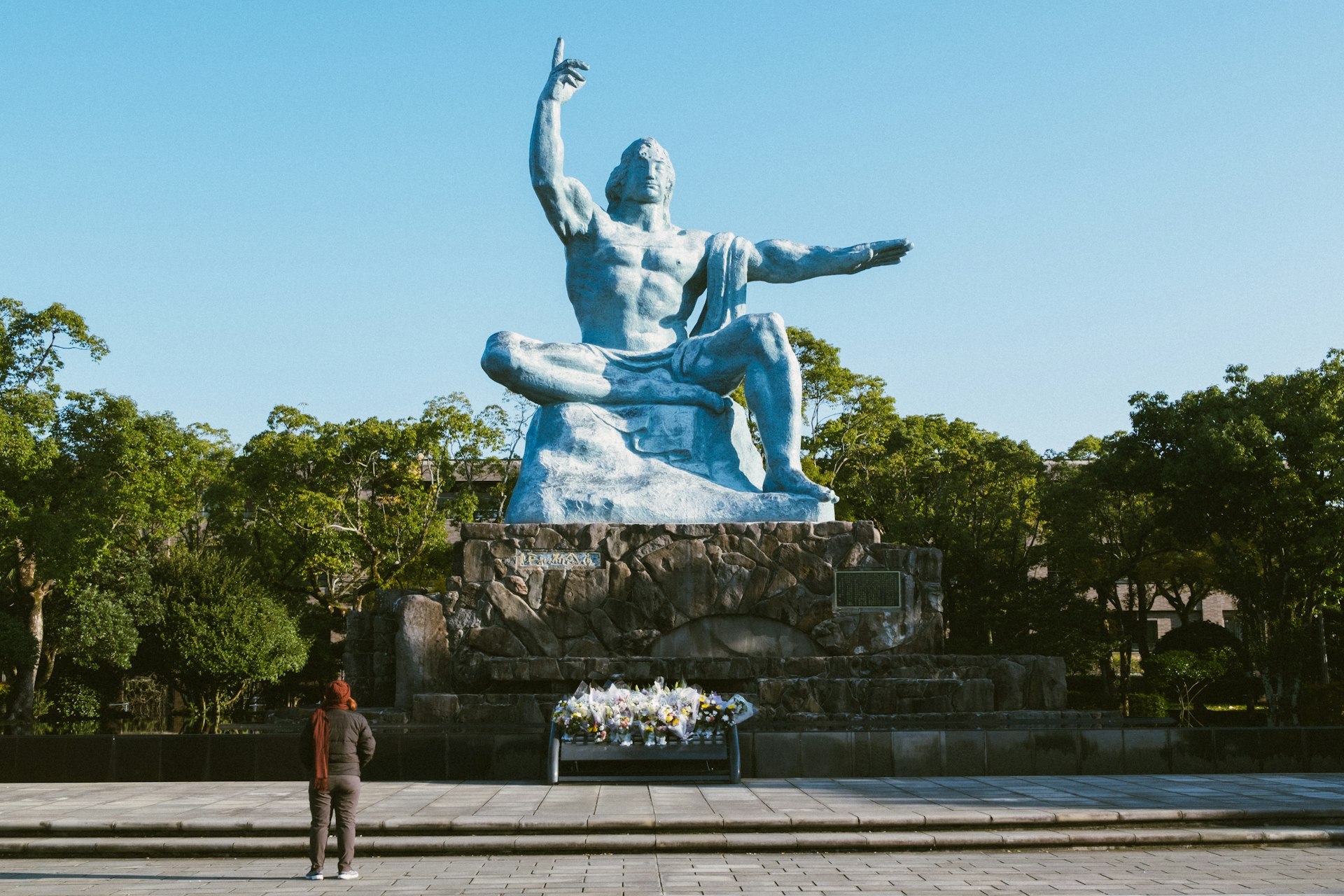
A harbour city of hills, history and resilience, with Japan's best night view.
- Best time to visit: March to May and October to November
- Daily budget (budget traveller): $80 to $140 USD
- Ideal trip length: 2 to 3 days
Nagasaki curves around one of the world's most beautiful harbours, a city shaped by centuries as Japan's only window to the outside world and by the atomic bombing of 1945. Today it offers moving memorials, a unique blend of Japanese, Chinese and European heritage, hillside temples, and the celebrated night view from Mount Inasa.
Nagasaki is the Japanese city that feels least like the rest of Japan. Wedged between steep green hills and a deep natural harbour, it spent two centuries as the country's only legal window to the outside world. Dutch traders were penned onto the fan-shaped island of Dejima, Chinese merchants had their own walled compound, and Portuguese priests left behind both castella sponge cake and a hidden Christian community that survived 250 years of persecution. You can taste that mix in a bowl of champon, hear it in the church bells of Oura, and see it in a Chinese temple painted vermilion next to a Buddhist graveyard on a hillside.
Then there is August 9, 1945. The Urakami Valley, a few tram stops north of downtown, was the target of the second atomic bomb, and the city handles that memory with a quiet seriousness. The Peace Park, the Atomic Bomb Museum (¥200) and the half-destroyed Urakami Cathedral are the emotional centre of any visit. Give them a full morning and nothing else on the schedule. The rest of Nagasaki is gentler than you expect: tram rides for ¥140, castella shops that have been open since 1624, and slope elevators that carry you up residential hills for free.
Plan for stairs, rain and a very good night. Nagasaki is built vertically, so a pair of grippy shoes matters more than any guidebook. The reward is the view from Mount Inasa, 333m up, where the harbour glitters like a spilled jewellery box. Most visitors tick it off in two days, but three or four is the sweet spot: add the Gunkanjima ghost island by boat, a day among the steaming hells of Unzen, or a slow afternoon in the temples of Teramachi, and Nagasaki repays you with the kind of travel that sticks.
How many days in Nagasaki?
For Nagasaki, we recommend 2 to 3 days.
| Trip length | What you'll see | Itinerary |
|---|---|---|
| 2 days · Recommended | Orient, Nishizaka and Hamanomachi; Urakami: Peace Park and the Atomic Bomb Museum | Nagasaki in 2 days |
| 3 days · Recommended | Adds: Dejima, Oura, Glover and the night view | Nagasaki in 3 days |
| 4 days | Adds: Gunkanjima by boat and the temple streets | Nagasaki in 4 days |
| 5 days | Adds: Unzen day trip | Nagasaki in 5 days |
| 7 days | Adds: Dutch dreams at Huis Ten Bosch or a slow day; Castella, Suwa Shrine | Nagasaki in 7 days |
Nagasaki itinerary
Arrive, orient, Nishizaka and Hamanomachi
Morning: Arrive at Nagasaki Station by the relay express from Takeo Onsen, which connects across the platform with the shinkansen (about 90 minutes in all). Leave bags in coin lockers or at your hotel. Buy a ¥600 tram day pass from the station kiosk.
Afternoon: Walk 10 minutes uphill to the 26 Martyrs Museum and Monument on Nishizaka Hill (¥500, 9am to 5pm). Tram to Hamanomachi and browse the covered arcades.
Evening: Turkish rice at Tsuruchan, Nagasaki's 1925 cafe-restaurant. Drinks in the lanes of Shianbashi, then an early night.
Urakami: Peace Park and the Atomic Bomb Museum
Morning: Tram to Hamaguchi-machi and be at the Atomic Bomb Museum for its 8:30am opening (¥200). Allow 90 minutes. Then walk to Hypocenter Park and the Peace Park, ending at the Peace Statue.
Afternoon: Walk to the rebuilt Urakami Cathedral, then the free Nagasaki National Peace Memorial Hall where atomic bomb survivor testimonies are archived. Lunch at a small teishoku place near Urakami Station.
Evening: Tram back south to Dejima Wharf for a harbour dinner, fish and a quiet drink. Early bed.
Dejima, Oura, Glover and the night view
Morning: Dejima at 8am (¥520), before the school groups. Tram to Oura-Tenshudo-shita, then Oura Church and Glover Garden at opening (¥620). Use the free slope car to reach the upper garden gate.
Afternoon: Late champon lunch at Shikairo, the 1899 birthplace of the dish, then Chinatown for kakuni manju and a stroll to Meganebashi.
Evening: Arrive at the Inasa ropeway 30 minutes before sunset (¥1,250 return). Stay at the summit through blue hour. The last ropeway down is at 22:00.
Gunkanjima by boat and the temple streets
Morning: Morning cruise to Hashima (Gunkanjima), about 3 hours total with a 40 minute landing, ¥5,000-6,000. Book ahead and check weather before leaving the hotel.
Afternoon: Walk the Nakashima river, see Meganebashi when the water is calm, then climb to Sofukuji (¥300, 8am to 5pm) and the Teramachi temple row.
Evening: Dinner at a sushi counter or izakaya on Hamanomachi's back streets. Order the local fish, aji and kampachi.
Unzen day trip
Morning: Bus from Nagasaki to Unzen Onsen (about 2 hours, ~¥2,000). Walk the sulphur-steaming Unzen Jigoku trail.
Afternoon: Lunch in Unzen on onsen-egg ramen or a set meal. Soak at Unzen Onsen's public bath (about ¥500 to 800), then bus to Shimabara for the castle if time permits.
Evening: Return bus to Nagasaki. Light dinner of sara udon in Chinatown.
Dutch dreams at Huis Ten Bosch or a slow day
Morning: JR Rapid Seaside Liner from Nagasaki to Huis Ten Bosch (about 1h35). Walk the tulip lanes and canals, then check the illuminations.
Afternoon: Ride the park's attractions or just wander the Dutch town. Return to Nagasaki at dusk.
Evening: Final big dinner: shippoku at Kagetsu, or a casual izakaya in Hamanomachi.
Castella, Suwa Shrine and depart
Morning: Buy castella at Fukusaya (founded 1624) or Bunmeido Sohonke. Tram to Suwa Shrine and climb the 277 steps.
Afternoon: Last champon at Ringer Hut or a bowl of sara udon in Chinatown. Collect bags at the station.
Evening: Relay express and shinkansen via Takeo Onsen to Hakata for Fukuoka Airport, or the airport bus to Nagasaki Airport (about 45 minutes).
Best neighbourhoods
- Hamanomachi & Chinatown: The lively downtown core with shopping arcades, Japan's oldest Chinatown, and tram connections to everywhere.
- Oura & Glover: The hillside foreign settlement district with Glover Garden, Oura Church, and sweeping harbour views.
- Urakami: The northern district around the Peace Park and Atomic Bomb Museum, quiet and reflective.
Must-do experiences
- Reflect at the Peace Park and Atomic Bomb Museum: A sobering, essential visit tracing the events of August 9, 1945, and the city's message of peace.
- Ride the ropeway to Mount Inasa: The summit observatory delivers what is regularly voted Japan's best night view over the glittering harbour.
- Wander Glover Garden: Late Edo and Meiji era Western mansions on a landscaped hillside telling the story of Nagasaki's foreign traders.
- Explore Dejima: The reconstructed fan shaped island where Dutch traders lived in isolation for two centuries.
- Eat champon in Chinatown: Nagasaki's signature noodle dish, a rich pork and seafood broth born in the city's Chinese quarter.
- Visit Sofukuji Temple: A rare 1629 Chinese style temple with a striking vermillion gate, built by residents from Fujian.
Hidden gems
- The slope cars (sloping elevators) of the Glover Skyroad, free and fun
- Meganebashi, the spectacles bridge, best photographed when the arches reflect as circles
- Hashima (Gunkanjima), the abandoned battleship island reachable by boat tour
- The Dutch Slope stone streets at dusk when the crowds have gone
Daily budget
- Accommodation: budget ¥3,000-4,500 / night (hostel dorm or capsule), mid-range ¥9,000-16,000 (business hotel or boutique double), splurge ¥30,000+ (ANA Crowne Plaza Gloverhill, ryokan with dinner). Stay near Hamanomachi or Nagasaki Station so a tram day pass covers everything. Rates jump around Golden Week and August 9.
- Food: budget ¥2,500-3,500 / day (Ringer Hut champon, konbini, teishoku lunches), mid-range ¥6,000-9,000 (Shikairo champon, Turkish rice, an izakaya dinner), splurge ¥15,000+ (shippoku course at Kagetsu, high-end sushi). Lunch teishoku sets are ¥900-1,300 and include rice, miso and pickles. Cheaper and better than dinner.
- Transport: budget ¥600 / day (tram day pass) or ¥140 per ride, mid-range ¥1,500-3,000 (trams, ropeway shuttle, one taxi back uphill), splurge ¥15,000+ (private 3 hour sightseeing taxi). Flat ¥140 tram fare means the day pass pays off at five rides. Walk the downtown core.
- Activities: budget ¥1,000-2,000 / day (Peace Park is free, Atomic Bomb Museum ¥200, Dejima ¥520), mid-range ¥4,000-9,000 (Glover Garden ¥620, Inasa ropeway ¥1,250, Gunkanjima cruise ~¥5,000), splurge ¥15,000+ (private guide, Huis Ten Bosch passport). Many churches, shrines and the Peace Park cost nothing. The Atomic Bomb Museum is the cheapest great museum in Japan.
- Drinks & nightlife: budget ¥1,000-1,500 (konbini chuhai, a pint at a standing bar), mid-range ¥3,000-5,000 (izakaya in Hamanomachi or Shianbashi with sake), splurge ¥8,000+ (cocktail bar, long shochu tasting). Nagasaki is a quiet drinking town. Izakaya often add a table charge (otoshi) of ¥300-500.
Where to stay
- Social hostel in Hamanomachi / Shianbashi (¥3,000-4,500 / night): Hostel Akari and similar guesthouses sit near the tram lines, restaurants and nightlife. Dorms, shared kitchens and staff who know the Inasa schedule by heart.
- Boutique hotel in Dejima / Chinatown (¥12,000-20,000 / night): Hotel Monterey Nagasaki, a Portuguese-styled hotel a short walk from Dejima and Chinatown, with elegant rooms and a calm lobby. Tram stops are close.
- Apartment in Teramachi or Kajiya-machi (¥7,000-12,000 / night): Quiet temple streets with convenience stores, laundromats and local bakeries. Best for stays of 4 nights or more, often with a kitchenette.
- Splurge in Minamiyamate (Oura hillside) (¥28,000-45,000 / night): ANA Crowne Plaza Nagasaki Gloverhill sits above the harbour with sweeping views and a short walk to Glover Garden. Request a harbour-view room.
What to eat
- Champon at Shikairo, where the dish was invented in 1899
- Sara udon, crispy noodles topped with thick seafood sauce
- Castella cake, the Portuguese sponge cake Nagasaki made famous
- Kakuni manju, braised pork belly buns in Chinatown
Day trips
- Gunkanjima (Hashima) (About 50 minutes by boat each way): The abandoned concrete coal-mining island that resembles a battleship. Tours include a 40 minute landing on a walkway when seas allow. Book a morning sailing, since afternoon winds often cancel boats. Boat from the harbour terminal near Dejima. Tours (Gunkanjima Concierge and others) run about ¥5,000-6,000 with a landing fee.
- Unzen Onsen and Shimabara (About 2 hours by bus): A mountain hot-spring village with steaming sulphur hells, forest walks and public baths, plus Shimabara's castle and carp-filled canals. Go on a clear day for views of Mount Fugen. Express bus from Nagasaki Station area to Unzen, roughly 2 hours and ~¥2,000. Check the timetable and the last return bus.
- Huis Ten Bosch (About 1h35 by train): A full-scale Dutch town with canals, windmills, tulips and huge seasonal illumination shows. Entertaining for families and photographers, and surprisingly pretty at night. JR Rapid Seaside Liner from Nagasaki Station to Huis Ten Bosch, about ¥1,800 one way. One-day passport is roughly ¥8,000.
When to visit
- Spring (March - May): 10-24°C, mild, occasional rain, cherry blossom late March to early April. Crowds: Moderate, heavy during Golden Week (April 29 to May 5). One of the two best windows. Perfect walking weather for the hills. Book hotels early for Golden Week or skip those dates.
- Summer (June - August): 24-33°C, very humid, rainy season June to mid July, typhoon risk from August. Crowds: Light in June and July, heavy around the August 9 peace ceremony. Hot, sticky and hilly. Worth it only for the August 9 Peace Memorial Ceremony. Gunkanjima boats are often cancelled in rough seas.
- Autumn (September - November): 28°C in early September falling to 10-20°C in November, typhoons possible until mid September. Crowds: Moderate, peaking around the Okunchi festival (October 7 to 9). The locals' pick. October and November bring clear skies, crisp night views from Inasa and red maples at the temples. Okunchi is a spectacular festival at Suwa Shrine.
- Winter (December - February): 3-12°C, dry and bright, snow is rare. Crowds: Low, except at the Lantern Festival (usually the first three weeks of February). Cheapest hotels and the clearest night views. The Lantern Festival turns Chinatown into a glowing river of 15,000 lanterns. Pack a proper coat for the ropeway summit.
Entry rules for your passport
Visa rules for Japan depend on the passport you travel on. Check the official source before you book: Japan Ministry of Foreign Affairs
Getting there
Nagasaki Airport (NGS) sits on an island in Omura Bay, about 45 minutes by airport limousine bus from Nagasaki Station (around ¥1,200). Flights from Tokyo Haneda take about 2 hours, with ANA, JAL and Skymark; Peach and Jetstar connect to Osaka, and Seoul and Shanghai have direct services. Most visitors arrive by rail instead. From Fukuoka Airport, take the subway to Hakata (5 min, ¥260), then the shinkansen to Takeo Onsen and the relay express to Nagasaki, which connects across the platform (about 90 minutes in all; the direct express no longer runs). Highway buses from Hakata take 2.5 hours and start around ¥3,000. Nagasaki Station is a short tram ride from Hamanomachi.
Getting around
The vintage streetcars are the easiest way around, with a flat 150 yen fare or a 600 yen day pass covering all lines. Mount Inasa is reached by ropeway from Fuchi Shrine station, a short bus or tram ride from Nagasaki Station. Nagasaki has its own airport, about 45 minutes away by bus; from Fukuoka, the train takes about 90 minutes, with a change onto the shinkansen at Takeo Onsen.
Safety
Nagasaki is extremely safe, among the safest cities in Japan. Usual precautions apply: hills can be slippery in rain, and typhoon season (August to September) can disrupt ferries to outlying islands.
Solo travel tips
- Eat at the counter: Solo dining is completely normal in Japan. Champon shops, ramen counters and sushi bars have single seats, and most menus have pictures or plastic models you can point at. You will never be asked to wait for a second diner.
- Do the Peace Park early and alone: Arrive at the Atomic Bomb Museum for the 8:30am opening, before the school tours. Take your time at the Hypocenter Park cenotaph and keep your phone in your pocket. Many visitors find this part of the trip works best without a companion.
- Hostel pick: Hostel Akari or any dorm near Hamanomachi: Nagasaki's hostel scene is small and friendly rather than party-driven. Pick a place within a 5 minute walk of a tram stop and ask about shared dinners or tram-pass swaps. Staff often hand out hand-drawn maps.
- Use the free slope cars and volunteer guides: Slope elevators around Glover Garden and the Dutch Slope are free and save your knees. The tourist info desk at Nagasaki Station can often arrange volunteer guides for a few hours, an easy way to meet a local without paying a tour fee.
- Solo female travellers: Nagasaki is among the safest cities in Japan. Use standard sense: poorly lit side streets above Oura are steep and quiet at night, so catch the tram or a taxi back. Hostels offer women-only dorms and capsule floors.
- Find your tribe at izakaya and on the ropeway: The sunset queue at Mount Inasa is full of other solo travellers taking photos, so offer to swap shots. Izakaya in Hamanomachi often have regulars at the counter who will point out dishes. Learn 'osusume wa?' (what do you recommend?).
Cultural etiquette
- Keep voices low and phones away at the Peace Park, Hypocenter Park and the Atomic Bomb Museum. Selfies at memorials are frowned on.
- Urakami Cathedral is a working church. Do not enter during Mass and keep to marked visitor areas.
- On Nagasaki trams, board by the rear door and pay when you exit at the front. Carry ¥140 in coins, and have a ¥1,000 note changed at the driver's machine if needed.
- Do not tip. Service is included, and leaving money on the table causes confusion.
- Take shoes off at ryokan and some restaurants with raised floors. Look for the shoe rack or slippers at the door.
- Slurping noodles is normal and polite. Finish your champon broth or at least do not leave a pool of leftover noodles.
- Stand on one side of escalators and on the correct side of station platforms. Do not eat while walking except at street stalls.
Frequently asked questions
How many days do I need in Nagasaki?
Two full days cover the Peace Park, Atomic Bomb Museum, Dejima, Glover Garden, Chinatown and the Mount Inasa night view comfortably. Add a third day for a Gunkanjima boat tour or day trips to Unzen or Shimabara.
How do I get from Fukuoka to Nagasaki?
Take the Relay Kamome limited express from Hakata to Takeo Onsen and change across the platform onto the shinkansen: about 90 minutes in all. The old direct limited express no longer runs. Highway buses are cheaper at around 2.5 hours. Both are covered by some JR passes.
Is the Atomic Bomb Museum appropriate for children?
The museum presents the bombing honestly, including graphic photographs, so parents should decide based on age and sensitivity. Older children and teenagers often find it deeply educational. The Peace Park itself is calm and suitable for all ages.
What food is Nagasaki famous for?
Champon, a hearty noodle soup, and sara udon, its crispy noodle cousin, top the list. Castella sponge cake, kakuni manju pork buns, Turkish rice, and fresh harbour seafood round out a distinctive local food scene.
When is the best time to visit Nagasaki?
Spring (March to May) and autumn (October to November) offer mild weather, cherry blossoms or autumn colour. February's Lantern Festival lights up Chinatown with thousands of lanterns and is worth planning around.
Is Nagasaki walkable?
The centre is compact but hilly. Trams cover the main north to south spine, and free slope elevators help with the steepest hillsides. Comfortable shoes are essential, and the ropeway saves the climb to Mount Inasa.
What is Gunkanjima and can I visit it?
Gunkanjima (Hashima) is an abandoned concrete mining island that resembles a battleship and appeared in the Bond film Skyfall. Boat tours run from Nagasaki harbour, weather permitting, for around 5,000 yen. Landing depends on sea conditions.
More about Nagasaki
- Where to Travel in 2027: 15 Places Worth Planning a Trip Around
- Tokyo for First-Time Visitors: 5-Day Guide With Hidden Gems
- Japanese Culture and Etiquette: A Situation-by-Situation Guide
- Cultural Etiquette in Japan: Quick Do's and Don'ts for First-Timers
Tours and activities in Nagasaki | Nagasaki in 2 days | Nagasaki in 3 days | Nagasaki in 4 days | Nagasaki in 5 days | Nagasaki in 7 days
Can't decide? Compare Nagasaki with...
Joy Plus home | Destinations | Itineraries | Activities | Flights | Budget planner | Calendar | Map | Blog | Lifetime access