Destinations / Asia
Naoshima, Japan travel guide
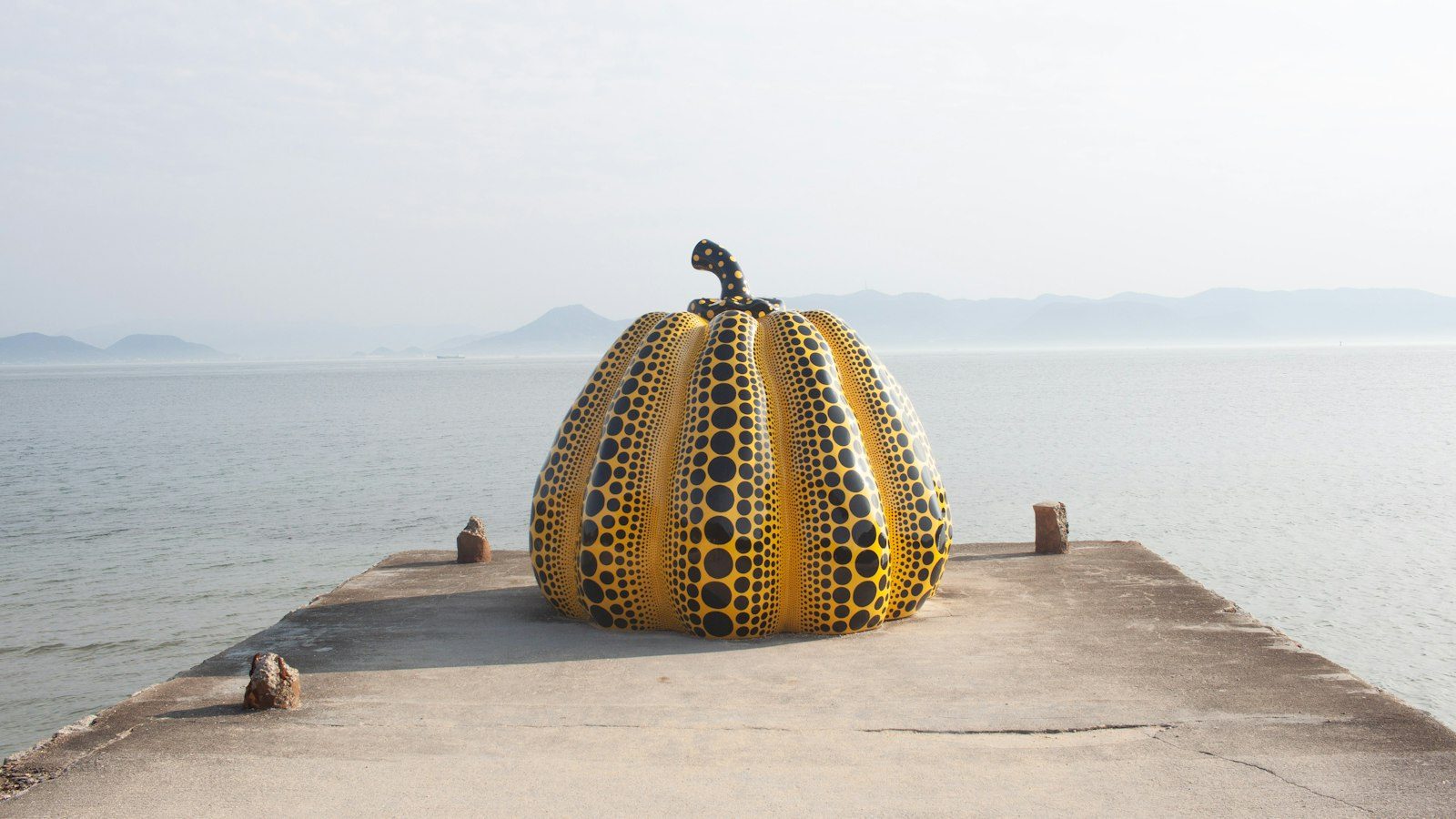
A small, hilly island in the Seto Inland Sea that has become one of the world's great places to see contemporary art. You cycle between Tadao Ando museums, see Monet lit only by daylight underground and finish the day with a soak in a bathhouse that is itself an artwork.
- Best time to visit: Late March to May and October to November
- Daily budget (budget traveller): $80 to $250 USD
- Ideal trip length: 2 to 4 days
Naoshima is a small island of about 3,000 people in the Seto Inland Sea, between Okayama on Honshu and Takamatsu on Shikoku. For most of the 20th century it was known for its copper smelter. Then the Benesse group started building museums here in the late 1980s, and the island now holds some of the best contemporary art and architecture in Asia. The headline is the Chichu Art Museum, which Tadao Ando built almost entirely underground. It shows Monet's water lilies, James Turrell and Walter De Maria in rooms lit only by daylight. Around it you have Benesse House Museum, the Lee Ufan Museum, the Naoshima New Museum of Art, which opened in 2025, and the Art House Project, where artists have taken over old houses in Honmura village. Yayoi Kusama's pumpkins sit by the sea. The island is small enough to cross by e-bike in 20 minutes, but it is hillier than it looks. Ferries take 20 minutes from Uno or about an hour from Takamatsu. Most visitors come on a rushed day trip. Stay one or two nights instead and you get quiet mornings, sunset on the south coast and time for the neighbouring islands. Rooms are limited and the art is not cheap, but the buses cost ¥100, the outdoor works are free and the island is very safe.
Naoshima is a quiet fishing and industrial island in the Seto Inland Sea that became an art destination almost by accident. In the late 1980s, the Benesse group and the architect Tadao Ando began building a campsite and then a hotel museum on the empty south coast. Thirty-odd years later, the island has the Chichu Art Museum, Benesse House, the Lee Ufan Museum, the ANDO MUSEUM, the 2025 Naoshima New Museum of Art and a village full of art houses. Copper is still smelted at the north end, and people still fish, grow vegetables and run small inns. Most visitors rush through in a day. If you stay a night or two, you get Honmura's lanes empty in the morning, sunset over the beach sculptures and the I Love Yu bathhouse with the locals.
Getting here is straightforward. From Okayama, take the JR Uno Line to Uno, then a 20-minute ferry to Miyanoura for ¥370. From Takamatsu, the ferry takes 50 to 60 minutes for ¥680, or the high-speed boat about 30 minutes for ¥1,590. On the island, rent an e-bike at Miyanoura for about ¥1,500 a day, or use the ¥100 town bus and the free museum shuttle from Tsutsujiso. Base yourself in Miyanoura for convenience, Honmura for village atmosphere or Benesse House if you want to wake up inside a museum. If the island is full, Uno and Takamatsu are good fallbacks.
Timing matters more than you might expect. Most museums close on Mondays, Chichu needs a timed booking and the last ferries leave in the evening. Spring and autumn are the best times for cycling. Summer is hot and sticky, the rainy season arrives in June and typhoons can cancel boats from late summer into autumn. The Setouchi Triennale filled the islands in 2025, and the next one is due in 2028, so 2026 is a calmer year. Art tickets add up quickly, with Chichu alone around ¥2,500, but the outdoor works, beaches and pumpkins are free, and the island is one of the safest and most relaxed places in Japan to travel alone.
Naoshima itinerary
Arrive and find your feet
Morning: Take the shinkansen to Okayama, then the JR Uno Line to Uno. Catch the ferry to Miyanoura (¥370, 20 minutes) and leave your bag at your guesthouse or in a port locker.
Afternoon: Rent an e-bike opposite the port. See the Red Pumpkin and the Naoshima Pavilion, then ride the coast road to get your bearings.
Evening: Soak in the I Love Yu bathhouse (about ¥660), then have an early dinner in Miyanoura before the kitchens close.
Chichu and the south coast
Morning: Arrive at your timed Chichu slot (about ¥2,500 online) at opening, when the Monet room and Turrell's Open Sky are quietest.
Afternoon: Walk down to the Lee Ufan Museum, then on to Benesse House Museum and the Valley Gallery. Stop at the Yellow Pumpkin on the way.
Evening: Watch the sunset over the beach sculptures below Benesse House, then ride back carefully with a light.
Honmura village
Morning: Start at your booked Minamidera slot, then walk the other Art House Project houses and climb to Go'o Shrine.
Afternoon: Have a set lunch in an old house, then visit the Naoshima New Museum of Art (¥1,500 online) and the ANDO MUSEUM.
Evening: Wander Honmura's lanes as the day trippers leave, then take the bus back to Miyanoura.
Teshima
Morning: Take a boat to Teshima and rent an e-bike at Ieura port. Check that the Teshima Art Museum is open and book your slot ahead.
Afternoon: Visit the Teshima Art Museum, where water beads across a concrete shell, then ride to Christian Boltanski's heartbeat archive by the beach.
Evening: Catch the last suitable boat back to Naoshima, and plan your return time before you leave in the morning.
Takamatsu and udon
Morning: Take the ferry to Takamatsu (¥680, about an hour). Have breakfast udon at a self-service shop.
Afternoon: Walk Ritsurin Garden, one of Japan's finest strolling gardens, then look around the covered shopping arcades.
Evening: Take the ferry back to Naoshima for a quiet evening, or stay over in Takamatsu if you are moving on to Shikoku.
Slow island day
Morning: Ride to Gotanji beach for a swim in summer or a walk in cooler months, then revisit a favourite museum.
Afternoon: Ride the quieter roads to the north and east, have a long café lunch and catch up on any Art House sites you missed.
Evening: Have a final bath at I Love Yu and pick up a picnic dinner from a Miyanoura shop to eat by the harbour.
Depart via Okayama
Morning: Take a morning ferry to Uno and the train to Okayama. Leave your bag in a station locker.
Afternoon: Visit Korakuen garden and Okayama Castle, or go on to Kurashiki's canal quarter if you have time.
Evening: Take the shinkansen onwards to Osaka, Kyoto or Hiroshima.
Best neighbourhoods
- Miyanoura: The main port on the west coast, where the big ferries from Uno and Takamatsu arrive. You will find Kusama's Red Pumpkin, the I Love Yu bathhouse, the e-bike rental shops, coin lockers, the bus stop and most of the cafés and guesthouses. It is the most practical base, with the most food and ferries on your doorstep.
- Honmura: The old village on the east coast, with narrow lanes, wooden houses, a small shrine on the hill and the Art House Project sites. The ANDO MUSEUM and the Naoshima New Museum of Art are here too. It has a few minshuku and cafés and is very quiet after dark. Small passenger boats link its port with Uno.
- South coast and Benesse House: The museum zone, with Chichu, Lee Ufan, Benesse House and the Yellow Pumpkin on its pier. Apart from the Benesse House hotel, there is almost nowhere to stay or eat in the evening. Visit by bus, e-bike or the free shuttle that runs from the Tsutsujiso stop.
- Uno (Tamano, Okayama): The small mainland port town 20 minutes away by ferry, at the end of the JR Uno Line from Okayama. Beds here are cheaper and easier to find than on the island, and there is a hostel near the port. It works well if Naoshima is full, but check the time of the last boat.
- Takamatsu: The capital of Kagawa on Shikoku, about an hour away by ferry or 30 minutes by high-speed boat. It has business hotels, hostels, udon shops and Ritsurin Garden. It is the best base if you also want to visit Teshima, Shodoshima and other islands, though the journey is longer.
Must-do experiences
- See the Chichu Art Museum: Ando's underground museum holds just three artists: Monet, James Turrell and Walter De Maria, all lit by daylight. Book a timed slot online, at about ¥2,500 on weekdays and ¥2,700 at weekends and on holidays. Walk-up tickets cost more and are often unavailable. It closes on Mondays.
- Walk the Art House Project in Honmura: Artists have turned old houses, a temple site and a shrine in Honmura into permanent installations. Single-house tickets cost about ¥600 online. Minamidera, with its James Turrell work, and Kinza need advance booking, so book those first and fill in the others around them.
- Visit the Naoshima New Museum of Art: Ando's newest building on the island opened in 2025 on a hill above Honmura. It shows rotating work by artists from Japan and the rest of Asia, and the café has sea views. Tickets are ¥1,500 online or ¥1,700 on the door. It is open from 10am to 4:30pm and closes on Mondays.
- Spend an afternoon at Benesse House Museum: This museum and hotel sits on the cliffs, with art inside and outdoor works running down to the beach. Entry is around ¥1,300, and the ticket also covers Ando's small Valley Gallery nearby. It stays open into the evening, so go later in the day when the light softens.
- Soak in the I Love Yu bathhouse: Artist Shinro Ohtake turned this working public bath by Miyanoura port into a riot of tiles, collage and a stuffed elephant. Entry is about ¥660, and you can buy a towel there. It is a good end to a hot day of cycling. Check it is open before you go.
- Cycle the coast to the pumpkins: Rent an e-bike at Miyanoura for about ¥1,500 a day and ride to Kusama's Red Pumpkin at the port and the Yellow Pumpkin on its pier on the south coast. Both are free. Go early or late to avoid the photo queue at the Yellow Pumpkin.
- Sit with Lee Ufan's work: The Lee Ufan Museum is a low, quiet Ando building half sunk into the valley between Chichu and Benesse House. Entry costs around ¥1,000 to ¥1,200, and you need about 45 minutes. Pair it with Chichu on the same morning, as they are a short walk apart.
Hidden gems
- The Naoshima Pavilion by Sou Fujimoto, a white steel-mesh 'island' at Miyanoura port that you can step inside for free
- The glass steps of Go'o Shrine in Honmura, part of the Art House Project, with a view over the village roofs to the sea
- Niki de Saint Phalle's bright sculptures on the beach below Benesse House, best at sunset when the day trippers have left
- Naoshima Hall in Honmura, a community hall by Hiroshi Sambuichi designed around wind and water, with an unusual roof you can see from the lane
- The north of the island seen from the ferry, where the Mitsubishi smelter that built Naoshima's economy still works beside the art island
Daily budget
- Accommodation: budget $25-45 / night (hostel dorm in Uno or Takamatsu), mid-range $60-140 (minshuku or small guesthouse on Naoshima), splurge $300-700+ (Benesse House). Beds on the island are few and sell out early, especially at weekends and in spring and autumn. Many minshuku have shared bathrooms. A local accommodation tax may be added.
- Food: budget $20-30 / day (supermarket breakfast, set lunch, udon or bento), mid-range $40-60 (café lunches and a sit-down dinner), splurge $100+ (Benesse House dinner). Island restaurants close early, and many close on Mondays. Shops in Miyanoura and Honmura are small, so stock up for dinner before 6pm. Prices are rough guides.
- Transport: budget $3-12 / day (town bus at ¥100, Uno ferry at ¥370), mid-range $12-25 (e-bike at about ¥1,500 plus ferries), splurge $40+ (high-speed boats, taxis or a water taxi). The Uno ferry is ¥370 one way. Takamatsu is ¥680 by ferry or ¥1,590 by high-speed boat. JR passes cover the Uno Line but not the ferries.
- Activities: budget $0-20 / day (free outdoor art, or Chichu at about ¥2,500 online), mid-range $30-50 (Chichu, Lee Ufan, Benesse House and Art House Project), splurge $80+ (Chichu evening programme, Teshima and Inujima). There is no single art pass, so you buy each ticket separately. Booking online is usually cheaper than paying at the door. The New Museum is ¥1,500 online and I Love Yu about ¥660.
- Drinks & nightlife: budget $3-8 (canned coffee, a beer from the shop), mid-range $15-30 (a few drinks at a café bar), splurge $50+ (wine at Benesse House). There is almost no nightlife on Naoshima. Evenings mean a bath, a beer and the stars. For bars, go to Takamatsu or Okayama.
Where to stay
- Social hostel in Uno or Takamatsu ($25-45 / night (dorm)): There are few dorm beds on Naoshima itself, so budget travellers often sleep at a hostel by Uno port or in Takamatsu and take the ferry over. Uno is only 20 minutes away and has the more frequent boats.
- Minshuku in Honmura or Miyanoura ($60-120 / night): Family-run inns in old island houses, with futons on tatami, shared bathrooms and sometimes dinner. Honmura is atmospheric and Miyanoura is handier for ferries and bikes.
- Guesthouse in Miyanoura ($80-180 / night): Small, modern guesthouses near the port have private rooms and English-speaking owners. Bike rental, food and the bathhouse are all a few minutes' walk away.
- Splurge in South coast ($300-700+ / night): Benesse House is a hotel inside a museum. Guests can see the art after closing time, and the rooms look out to sea. It books up early, and the booking system changed in August 2026, so check the official site.
What to eat
- Set lunch in an old Honmura house: brown rice, miso soup and seasonal vegetable dishes at places such as Aisunao, around ¥1,000-1,500
- Seto Inland Sea fish: sea bream (tai), octopus and small fried fish, on teishoku set meals at port-side restaurants
- Sanuki udon in Takamatsu: Kagawa's thick, chewy noodles, served cold or in hot broth at self-service shops for a few hundred yen a bowl
- Shodoshima olives and olive oil: the neighbouring island is famous for them, and you will find them in snacks, ice cream and gifts
- Okayama fruit in season: white peaches in summer and Muscat grapes in late summer and autumn, sold at Okayama Station and in Uno
- A café break with a sea view: the café at the Naoshima New Museum of Art or a Miyanoura kissaten, with shaved ice in summer
Day trips
- Teshima (About 20 to 30 minutes by boat from Honmura or Miyanoura, depending on the day): A greener, quieter island with terraced rice fields and the Teshima Art Museum, where Rei Naito and Ryue Nishizawa's concrete shell shelters slow-moving drops of water. Christian Boltanski's heartbeat archive is by the beach. Take a passenger boat to Ieura port and rent an e-bike there, as the island is hilly. Book Teshima Art Museum tickets online. It closes on some weekdays, often Tuesdays, so check before you go.
- Takamatsu and Ritsurin Garden (About 1 hour by ferry or 30 minutes by high-speed boat): Shikoku's gateway city, with Ritsurin Garden, one of Japan's finest strolling gardens, long covered shopping arcades and some of the best cheap udon in the country. Take the Shikoku Kisen ferry from Miyanoura (¥680) or the high-speed boat (¥1,590). Takamatsu Port is next to the station. Ritsurin Garden is a short train or bus ride away.
- Okayama and Kurashiki (About 1 hour to Okayama, plus 15 minutes by train to Kurashiki): Okayama has Korakuen garden and its black castle. Kurashiki has a canal lined with willows, old white-walled storehouses and the Ohara Museum of Art. Take the ferry to Uno and the JR Uno Line to Okayama, then the JR Sanyo Line to Kurashiki. Check the last boat back to Naoshima before you leave.
When to visit
- Spring (March - May): 10-23°C, mild and mostly dry, cherry blossom in late March and early April. Crowds: Moderate, very busy during Golden Week in late April and early May. One of the best times to visit. Cycling weather is ideal, but avoid Golden Week or book everything early.
- Early summer (June - mid July): 22-30°C, humid, frequent rain during the rainy season. Crowds: Moderate, quieter on weekdays. Fewer people and green hills, but expect wet days. The museums are a good place to shelter from the rain.
- High summer (Mid July - September): 28-35°C, hot and very humid, typhoon risk from August. Crowds: Busy in the August Obon holidays and at weekends. Swimming at Gotanji beach and long evenings, but cycling at midday is tough. Keep your plans flexible in case a typhoon cancels ferries.
- Autumn and winter (October - February): October and November 13-24°C and clear, winter 3-10°C. Crowds: Busy in October and November, quiet from December. Autumn is the locals' pick, with clear skies and soft light. Winter is cold but peaceful, e-bikes are cheaper and booking Chichu is easier.
Entry rules for your passport
Visa rules for Japan depend on the passport you travel on. Check the official source before you book: Japan Ministry of Foreign Affairs
Getting there
There is no airport on Naoshima. The nearest are Okayama Airport and Takamatsu Airport, and Kansai International is about three hours away by train and ferry. Most people come by rail. Take the shinkansen to Okayama, about 45 to 50 minutes from Shin-Osaka, then the JR Uno Line to Uno, which takes about an hour and sometimes needs a change at Chayamachi. Uno Station is a short walk from the ferry terminal. Shikoku Kisen's car ferry to Miyanoura takes about 20 minutes and costs ¥370, and small passenger boats run to Miyanoura and Honmura for the same fare. From Takamatsu, the ferry to Miyanoura takes 50 to 60 minutes for ¥680, and the high-speed boat about 30 minutes for ¥1,590. Takamatsu Airport is about 40 minutes from the port by limousine bus for ¥1,000. Teshima Ferry also runs some boats from Takamatsu to Honmura. Ferries do not take reservations, so arrive early at busy times. Bikes go only on the car ferries. JR passes cover the trains but not the boats.
Getting around
Naoshima is about 8 square kilometres. The main spots, Miyanoura, Honmura and the south coast museums, are 2 to 4km apart, with real hills between them. Most people rent an electric bicycle near Miyanoura port, which costs about ¥1,500 a day and around ¥1,000 at some shops from December to February. Regular geared bikes are about ¥500, but they are hard work on the climb to Chichu. The yellow town bus runs between Miyanoura, Honmura and the Tsutsujiso stop for ¥100 a ride, usually every 30 to 60 minutes. From Tsutsujiso, a free shuttle links Benesse House, Lee Ufan and Chichu. Buses fill up at busy times, so allow extra time before a Chichu slot. Walking from Miyanoura to Benesse House takes around 45 minutes, mostly uphill. There are a few taxis, but book them through your accommodation. Small passenger boats link Honmura with Uno, and some Takamatsu to Teshima boats stop there too. You do not need a car, and private cars are restricted in the museum area anyway.
Safety
Naoshima is extremely safe, and crime against visitors is almost unheard of. The real risks are practical. In July and August it is very hot and humid, so carry water and do not cycle uphill at midday. Roads are narrow, traffic drives on the left and the downhill stretches on the south coast are steep, so ride carefully. The rainy season runs from June into July, and typhoons can arrive from August to October and cancel ferries, sometimes for a day or more. If a storm is forecast, keep your travel flexible. The last ferries leave in the evening, and missing them means an expensive water taxi or an unplanned night. Tap water is safe to drink. Call 110 for police and 119 for an ambulance or fire. JNTO's Japan Visitor Hotline (050-3816-2787) helps in English around the clock. Japan has no public health cover for visitors, so bring travel insurance with medical cover.
Solo travel tips
- Plan around Mondays: Most museums, many cafés and some bike shops close on Mondays. Use Monday for travel, Takamatsu or Okayama, and keep your Naoshima days for Tuesday to Sunday.
- Book Chichu first: Lock in your Chichu slot as soon as your dates are fixed, then plan ferries, beds and the other museums around it. Morning slots are calmer.
- Stay at least one night: After the late afternoon boats leave, the island empties. Evening light on the beach art and an early start in Honmura are the best parts of a visit.
- Eat early: Island kitchens close early and some shut for the evening entirely. Book dinner with your minshuku or buy food in Miyanoura before 6pm.
- Safety for solo travellers: Crime is not the issue here. Heat, steep roads, typhoons and early last ferries are. Carry water and a bike light, check the boat times every day and keep a buffer day when typhoons are forecast.
- Meet people at the bath and in the guesthouse: Small guesthouses have shared lounges, and the I Love Yu bathhouse is a social place. Hostels in Uno and Takamatsu are also easy places to find a cycling partner for the next day.
Cultural etiquette
- Say 'konnichiwa' (hello) and 'arigatou gozaimasu' (thank you). A small bow goes a long way in a village this size.
- Remember that Honmura and Miyanoura are lived-in villages, not theme parks. Keep your voice down, do not peer into private homes and do not block lanes with bikes.
- Follow the no-photography rules inside Chichu and other museums. Staff will stop you, and the rules protect the experience for everyone.
- Take your shoes off where asked, including at some Art House Project houses and all minshuku. Socks without holes help.
- At I Love Yu, wash thoroughly before you get in the bath, keep your towel out of the water and check the rules on tattoos.
- Do not tip. It is not part of Japanese culture and can cause confusion. Polite thanks are enough.
- Take your rubbish with you. There are few public bins on the island, so carry a small bag.
Frequently asked questions
How do I get to Naoshima?
Take the shinkansen to Okayama, then the JR Uno Line to Uno, which takes about an hour and sometimes means changing at Chayamachi. The ferry terminal is a short walk from Uno Station. The car ferry to Miyanoura takes about 20 minutes and costs ¥370, and small passenger boats go to Miyanoura or Honmura for the same fare. From Takamatsu, the ferry takes 50 to 60 minutes for ¥680, or the high-speed boat about 30 minutes for ¥1,590. Bikes and luggage can only go on the car ferries.
How many days do I need on Naoshima?
A day trip covers Chichu and one or two other sites, but it feels rushed. Two nights gives you the south coast museums on one day and Honmura and the new museum on the other, with sunsets and quiet mornings in between. Three or four nights lets you add Teshima, Inujima or Takamatsu. A week works if you combine the islands with Okayama and Kurashiki.
When is the best time to visit Naoshima?
Late March to May and October to November bring mild weather that is good for cycling. Spring has cherry blossom, and autumn is usually clear. June and early July are rainy. July and August are hot and humid, and typhoons can disrupt ferries from August to October. Winter is cold but quiet, with cheaper e-bikes, though some cafés keep shorter hours. The Setouchi Triennale art festival was last held in 2025, so 2026 is calmer.
Do I need to book museum tickets in advance?
For Chichu, yes. Book a timed slot online as soon as your dates are fixed, especially for weekends, holidays and autumn. Online tickets are cheaper than paying on the door. The Art House Project's Minamidera and Kinza also need advance booking, and the Naoshima New Museum of Art sells dated tickets online. Remember that most museums close on Mondays, and on Tuesdays after a Monday public holiday.
Should I stay on Naoshima or visit as a day trip?
Stay if you can. Day trippers arrive on the morning boats and leave in the late afternoon, so evenings and early mornings are peaceful. Beds on the island are limited and fill early, so book weeks ahead. If Naoshima is full, Uno is the best backup because it is only 20 minutes away and has a hostel by the port. Takamatsu is better for hopping to other islands.
Is an e-bike or the bus better for getting around?
An e-bike gives you the most freedom and costs about ¥1,500 a day near Miyanoura port. It takes the effort out of the hills and lets you stop at outdoor works. The ¥100 town bus and free museum shuttle are fine if you do not want to cycle, but they get crowded and run only every 30 to 60 minutes. In heavy rain or extreme heat, the bus is the safer choice.
Is Naoshima safe for solo female travellers?
Yes. Japan is one of the safest countries for women travelling alone, and Naoshima is a quiet village island where people leave bikes unlocked. The main things to plan for are dark, empty roads after sunset, so carry a light if you cycle back late, and the early last ferries. Shared baths are separated by gender, and many minshuku have women-only bathing times.
What entry rules apply to Japan in 2026?
Citizens of many countries, including the UK, the US, Canada, Australia and the EU, can visit Japan visa-free for short stays, usually up to 90 days. Fill in Visit Japan Web before you fly to speed up immigration and customs. Since 1 July 2026, the departure tax has been ¥3,000, which is added to your ticket price. Visa fees also rose that day for nationalities that need a visa. Japan's JESTA pre-travel authorisation is planned for around 2028 and is not needed yet. Check official Japanese government sources before you travel.
More about Naoshima
- Tokyo for First-Time Visitors: 5-Day Guide With Hidden Gems
- Japanese Culture and Etiquette: A Situation-by-Situation Guide
- Cultural Etiquette in Japan: Quick Do's and Don'ts for First-Timers
Tours and activities in Naoshima | Naoshima in 2 days | Naoshima in 3 days | Naoshima in 4 days | Naoshima in 5 days | Naoshima in 7 days
Joy Plus home | Destinations | Itineraries | Activities | Flights | Budget planner | Calendar | Map | Blog | Lifetime access