Destinations / Asia
Shirakawa-go, Japan travel guide
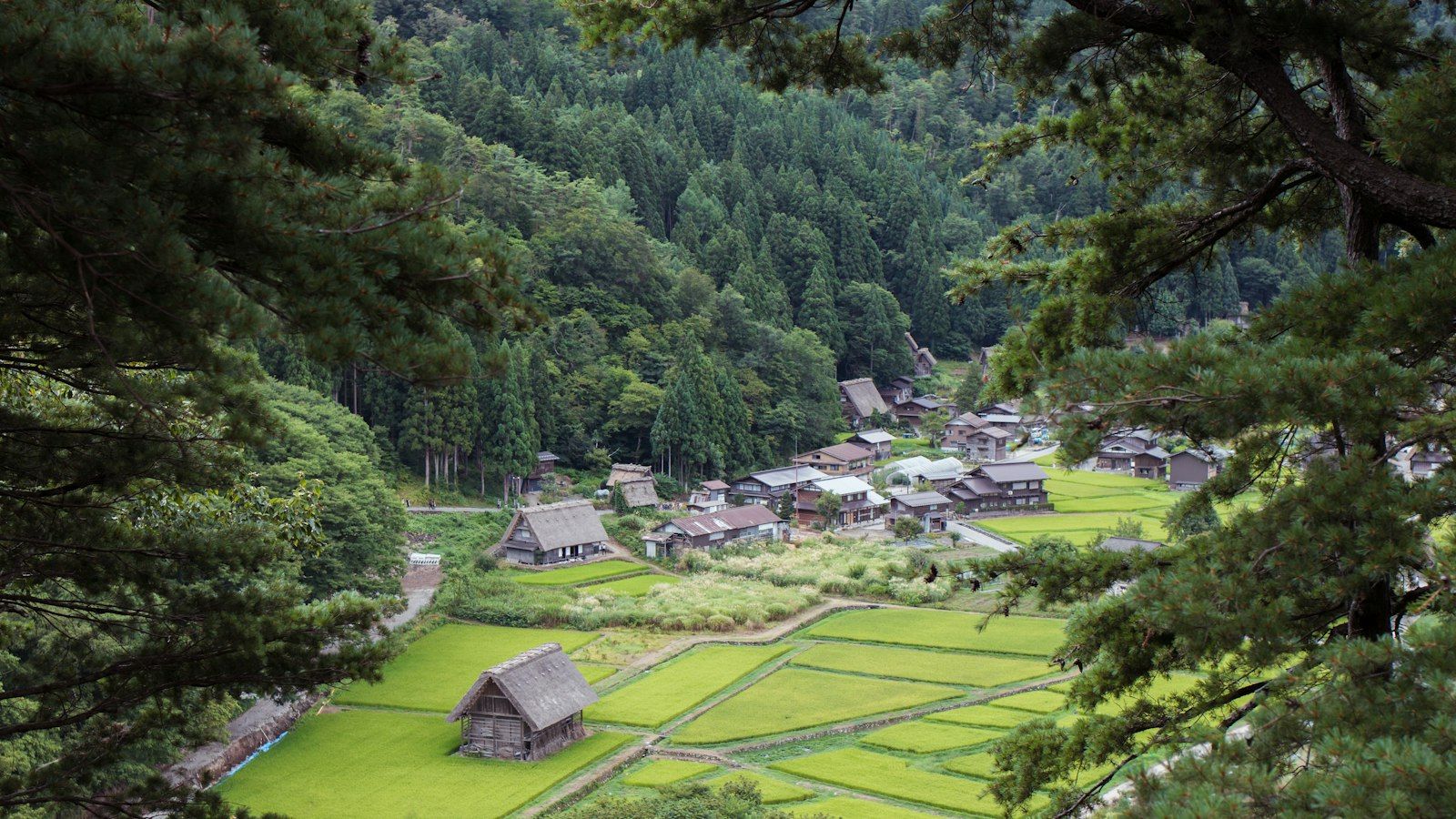
A UNESCO-listed valley of steep thatched farmhouses in the Japanese Alps. Sleep under a 200-year-old roof, eat hoba miso by the hearth, then take the bus on to Takayama, Gokayama and Kanazawa.
- Best time to visit: Late April to May and mid-October to early November, plus January to February for deep snow
- Daily budget (budget traveller): $60 to $200 USD
- Ideal trip length: 5 to 7 days (with Takayama, Gokayama and Kanazawa)
Shirakawa-go sits in a narrow river valley in the mountains of Gifu Prefecture. It is famous for its gassho-zukuri farmhouses, whose steep thatched roofs are said to look like hands pressed together in prayer. The main village, Ogimachi, is part of a World Heritage Site alongside Ainokura and Suganuma, two smaller villages over the prefectural border in Gokayama. Most visitors come for three hours on a coach and leave by mid-afternoon. Solo travellers who stay the night get a different village. Family-run farmhouse inns serve dinner around the irori hearth, the lanes go quiet after the last bus leaves, and you can watch the morning mist lift off the rice paddies. It is not a big trip on its own, so build it into a loop: Takayama's old merchant streets on one side, the Gokayama villages and Kanazawa's gardens on the other, all linked by highway buses and the Hokuriku Shinkansen. Japan is one of the safest countries in the world for travelling alone, and this corner of it is quiet, orderly and easy to get around.
Shirakawa-go is a farming village of around 1,500 people that hosts well over a million visitors a year, and nearly all of them arrive between 10am and 2pm. The thatched houses are not a museum set. Most are family homes, a few are inns or cafés, and a handful open their attics to paying visitors. There is no fee to enter the village. Drivers pay ¥2,000 to park, and 30% of that goes to preserving the houses. Wada House charges ¥400 for adults, and the Gassho-zukuri Minkaen open-air museum ¥800. The steep roofs were designed to shed heavy snow, and the big attics were once used for rearing silkworms. Every few decades a roof is rethatched by neighbours working together, a system called yui that still survives here.
The day-tripper version of Shirakawa-go is a crowded loop past the same three houses. The overnight version is far better. Once the last bus leaves, the lanes go quiet and the minshuku start serving dinner by the hearth. At dawn you can walk the paddies with nobody else around. Farmhouse stays have become very popular, and reservations have become difficult to get, so book the night before anything else and plan the rest of the loop around it. Takayama is the natural first stop for its morning markets and sake breweries. Gokayama's Suganuma and Ainokura are the quieter second half of the World Heritage listing. Kanazawa, with Kenroku-en and the Omicho fish market, is your last stop and your link back to Tokyo by Shinkansen.
Each season changes the trip. Late April to May brings cherry blossom and water in the paddies. Summer is green and humid, with a rainy season in June and July. Mid-October to early November is the local favourite, with red maples, harvest festivals and crisp air. From December to March the village is buried in snow and looks like a postcard, but buses can run late, the viewpoint path can close and the four light-up evenings in January book out months in advance. The village has no nightlife, little mobile coverage on the hillsides and only a few places to eat dinner, so the minshuku meal is your evening. If you want izakaya and bars, save them for Takayama and Kanazawa.
Shirakawa-go itinerary
Arrive in Takayama, wander Sanmachi Suji
Morning: Take the JR Hida limited express from Nagoya (about 2.5 hours) and drop your bags at a hostel near Takayama Station. Book your Shirakawa-go bus seat for day 3 on Japan Bus Online if the service you want is marked R.
Afternoon: Walk the old merchant streets of Sanmachi Suji. Look for sake breweries with a cedar ball over the door and try a small tasting cup. Visit Takayama Jinya, the old government house (about ¥440, check current price).
Evening: Seared Hida beef nigiri from a Sanmachi stall, then a bowl of soy-based Takayama ramen. Early night.
Morning market, Hida Folk Village and Hida Furukawa
Morning: Browse the Miyagawa morning market along the river from about 7am for pickles, miso and mitarashi dango. Take a city bus or walk 30 minutes to Hida Folk Village (about ¥700) for a first look at relocated gassho houses.
Afternoon: JR local train to Hida Furukawa (about 15 minutes). Walk the Seto River canal with its carp and white-walled storehouses, and look into the small sake breweries.
Evening: Back to Takayama. Izakaya dinner with hoba miso and local sake, and pack a small overnight bag for the farmhouse.
Bus to Shirakawa-go, Wada House and the viewpoint
Morning: Nohi Bus from Takayama to Shirakawa-go (about 50 minutes, ¥2,800 or ¥2,900 from December 2026). Leave your bag at your minshuku if it can hold it, then go to Wada House (¥400, 9:00-17:00).
Afternoon: Lunch at Irori near the bus terminal. Visit Myozenji temple and the Kanda and Nagase houses. Walk 15 to 20 minutes up to the Shiroyama viewpoint, or take the shuttle from near Wada House.
Evening: Check in by mid-afternoon, as most inns serve dinner at a set time, around 6pm. Eat by the irori, then walk the emptied lanes with a torch.
Sunrise lanes, open-air museum and an onsen
Morning: Walk the paddies and lanes at first light before breakfast. Then cross the Deai-bashi bridge to the Gassho-zukuri Minkaen (¥800; closed on Thursdays from December to March).
Afternoon: Hoba miso or gassho tofu set lunch in the village, then a bowl of zenzai at the Ochudo farmhouse café. Late-afternoon soak at Shirakawa-go no Yu (about ¥800-900, bring a towel).
Evening: Second night in a different minshuku to try another family's cooking. Watch the lights come on in the farmhouse windows.
Gokayama: Suganuma and Ainokura, on to Kanazawa
Morning: Take the Kaetsuno World Heritage Bus from the Shirakawa-go Bus Terminal to Suganuma (about 30 minutes). Walk the tiny riverside village in about an hour.
Afternoon: Next bus north to Ainokura-guchi, then walk up to Ainokura's terraced village. Continue on the same line to Shin-Takaoka, and take the Hokuriku Shinkansen to Kanazawa (about 15 minutes). Check every bus time the night before, as buses are hours apart.
Evening: Check in near Kanazawa Station. Kanazawa oden or a casual izakaya in Katamachi.
Omicho, Kenroku-en and Higashi Chaya
Morning: Kaisendon breakfast at Omicho Market, then Kenroku-en garden (about ¥320, check current price) and the free grounds of Kanazawa Castle Park next door.
Afternoon: Free zones of the 21st Century Museum of Contemporary Art, then walk to the Higashi Chaya teahouse district for matcha and gold-leaf shops.
Evening: Stroll the riverside lanes of Kazue-machi as the lanterns come on. Dinner at a counter sushi bar if the budget stretches.
Nagamachi samurai district and departure
Morning: Walk the earthen walls and canals of the Nagamachi samurai district. The Nomura family house costs about ¥550, so check the current price.
Afternoon: Hokuriku Shinkansen to Tokyo (about 2.5 to 3 hours), or to Tsuruga to connect with the Thunderbird to Osaka and Kyoto. Buy an ekiben lunch box at Kanazawa Station.
Evening: Arrive in your onward city. Keep a spare day before an international flight in winter, in case snow delays your trains.
Best neighbourhoods
- Ogimachi village core (Shirakawa-go): The heart of the World Heritage village, with Wada House, Myozenji temple, Kanda and Nagase houses, the lunch spots and most of the gassho minshuku. The lanes are busy from 10am to 3pm and almost empty at dawn and after dark.
- West bank of the Sho River (Shirakawa-go): Across the Deai-bashi suspension bridge from the village, home to the Gassho-zukuri Minkaen open-air museum and the Shirakawa-go no Yu hot spring. It is slightly calmer than the core and a good place for a late-afternoon soak.
- Iijima and Hatogaya (Shirakawa-go): Quieter districts just south of the Ogimachi core, with a few more minshuku and soba shops. Good if the central inns are full and you do not mind a 10 to 20 minute walk into the village.
- Ainokura (Gokayama): The larger of the two Gokayama villages, on a terraced hillside about 45 minutes north by bus. It has a handful of gassho inns, far fewer tour groups and a properly rural feel once the day visitors go.
- Sanmachi Suji (Takayama): Takayama's preserved Edo-era merchant streets, lined with sake breweries, miso shops and Hida beef sushi stalls. It is the obvious gateway town, with hostels, the Miyagawa morning market and the bus centre next to the JR station.
- Higashi Chaya (Kanazawa): Kanazawa's best-preserved teahouse district, with wooden lattice facades, gold-leaf shops and cafés. It makes a good final base before you catch the Shinkansen to Tokyo.
Must-do experiences
- Look down on the village from the Shiroyama viewpoint: Walk 15 to 20 minutes uphill from the north end of Ogimachi, or take the small shuttle from near Wada House, for the classic view of thatched roofs in rows. Go early or late to avoid the midday crush.
- Sleep in a gassho-zukuri farmhouse: Book a family-run minshuku in Ogimachi for a tatami room, a set dinner by the hearth and the village to yourself after dark. Book early, because only a few inns take solo guests.
- Explore Wada House: Shirakawa-go's largest gassho house and a national Important Cultural Property. Climb into the attic floors to see the rope-bound rafters and the old silkworm-rearing spaces, with English panels upstairs.
- Walk through the Gassho-zukuri Minkaen: An open-air museum of relocated farmhouses across the Deai-bashi bridge, where you can go inside several buildings, see farm tools and watch craft demonstrations in a calmer setting than the main village.
- Visit Myozenji temple and museum: A rare thatched temple complex in the centre of Ogimachi, with a gassho-style bell tower and a priest's residence turned museum full of farming and daily-life objects.
- Soak at Shirakawa-go no Yu: The village's natural hot spring by the river, with indoor and outdoor baths. It is ideal after a snowy walk or a long day on the bus. Bring your own towel to avoid the rental fee.
- Take the World Heritage Bus to Gokayama: Ride the Kaetsuno bus north to Suganuma and Ainokura, the two quieter villages that share the UNESCO listing. You get the same architecture with a fraction of the crowds.
- Graze the Miyagawa morning market in Takayama: Start your trip on the riverside stalls in Takayama, buying pickles, miso, fruit and mitarashi dango from local farmers before the tour groups arrive.
Hidden gems
- A dawn walk through Ogimachi's rice paddies before 8am, when the only sounds are the irrigation channels and the minshuku kitchens starting breakfast
- The free Ogimachi Castle ruins lookout just below the main Shiroyama deck, which gives a similar view with fewer elbows
- Deai-bashi bridge at dusk, when the river mist rises and the day crowds have gone
- Suganuma in Gokayama, a tiny riverside cluster of thatched houses where you can walk the whole village in under an hour
- Hida Furukawa, 15 minutes by train from Takayama, with white-walled storehouses and carp in the Seto River canal
Daily budget
- Accommodation: budget ¥4,000-7,000 / night (dorm or capsule in Takayama or Kanazawa), mid-range ¥15,000-25,000 (gassho minshuku per person with dinner and breakfast, or a city business hotel), splurge ¥40,000+ (ryokan with kaiseki dinner and onsen). Your Shirakawa-go night will be the most expensive of the trip, but it includes two big meals. Some inns charge more for solo occupancy, and light-up nights cost far more. Check whether a local accommodation tax applies in Takayama and Kanazawa.
- Food: budget ¥2,500-4,000 / day (konbini breakfast, soba lunch, ramen dinner), mid-range ¥5,000-8,000 (hoba miso set lunch, izakaya dinner), splurge ¥15,000+ (Hida beef kaiseki, Kanazawa sushi counter). Set lunches in Shirakawa-go cost about ¥1,200-2,500, and street snacks such as Hida beef skewers and gohei mochi cost about ¥400-800. There are very few places to eat dinner in the village, so eat at your inn or carry snacks.
- Transport: budget ¥1,500-3,000 / day averaged (single bus tickets, local trains), mid-range ¥3,000-5,000 (regional pass plus a Shinkansen leg), splurge ¥10,000+ (taxis, private driver, Green Car seats). Takayama or Kanazawa to Shirakawa-go is ¥2,800 one way (¥2,900 from 1 December 2026). The Takayama-Hokuriku Area Tourist Pass (¥19,800 for five consecutive days) covers the highway buses between Kanazawa or Toyama, Shirakawa-go and Takayama, plus JR trains in the area. Check which sections it covers before you buy.
- Activities: budget ¥500-1,500 / day (Wada House, viewpoint shuttle, onsen), mid-range ¥2,000-4,000 (several house museums, Hida Folk Village, Kenroku-en), splurge ¥10,000+ (private guide, light-up bus tour, craft workshop). Wada House is ¥400 and the Minkaen is ¥800. The onsen is about ¥800-900, and the viewpoint shuttle is a few hundred yen each way. In Takayama and Kanazawa, Hida Folk Village is about ¥700 and Kenroku-en about ¥320, so check current prices.
- Drinks & nightlife: budget ¥300-800 (konbini beer, sake tasting cup), mid-range ¥1,500-3,000 (izakaya, Takayama brewery tastings), splurge ¥5,000+ (Kanazawa cocktail bar, premium sake flights). Shirakawa-go has no nightlife. Your evening is dinner at the inn and a walk through the dark village. Try doburoku, the local cloudy unfiltered sake, if you see it. Takayama's Sanmachi breweries offer cheap tasting sets, and Kanazawa's Katamachi and Kiyamachi have the bars.
Where to stay
- Social hostel in Near Takayama Station (¥4,000-7,000 / night (dorm)): Shirakawa-go has no hostels, so sleep cheaply in Takayama before and after. K's House Takayama is a few minutes' walk from the JR station and the Nohi Bus Center, and has a common room where you can swap bus tips.
- Boutique hotel in Ogimachi, Shirakawa-go (¥15,000-30,000 / person with meals): The boutique option here is a gassho minshuku. Koemon, Kidoya and Bunroku in Ogimachi are among the inns that accept solo guests, with tatami rooms, shared bathrooms and dinner around the irori. Book through the Shirakawa-go Tourist Association.
- Apartment in Higashi Chaya or Kazue-machi, Kanazawa (¥10,000-18,000 / night): Rent a restored machiya townhouse or a studio for your Kanazawa nights. A kitchen and washing machine are welcome after the farmhouse, and you are a short walk from the teahouse lanes and Omicho Market.
- Splurge in Takayama old town (¥40,000-80,000 / night): Honjin Hiranoya Kachoan offers a classic ryokan night with Hida beef kaiseki and hot-spring baths, a short walk from Sanmachi Suji. In Shirakawa-go, Yu no Sato, Yunosho and Shirakawa-go no Yu require a minimum of two adults per room, so solo splurges work better in Takayama. Check solo rates directly.
What to eat
- Hoba miso: sweet local miso, spring onion and mushrooms, often with Hida beef or pork, grilled on a dried magnolia leaf over a small burner at your table
- Gassho tofu: Shirakawa-go's famously firm tofu, served grilled on an iron plate, as yudofu or as dengaku with miso glaze
- Suttate: a creamy soup of stone-ground soybeans in a miso or soy broth, hard to find outside this valley
- Hida beef: Gifu's marbled wagyu, eaten as seared nigiri on Takayama's Sanmachi Suji, in croquettes, on skewers or grilled with hoba miso
- Soba with mountain vegetables: buckwheat noodles served hot or cold with foraged sansai such as bracken and butterbur shoots
- Gohei mochi: flattened rice cakes on a stick, brushed with sweet walnut miso and grilled, the classic snack for walking around
- Kaisendon at Omicho Market: a rice bowl piled with Sea of Japan seafood such as sweet shrimp and crab, for your Kanazawa leg
Day trips
- Gokayama (Suganuma and Ainokura) (About 30 to 45 minutes by bus north of Shirakawa-go): The two other villages in the World Heritage listing. Suganuma is a tiny riverside cluster, while Ainokura is a larger terraced village with gassho inns and far fewer visitors than Ogimachi. Take the Kaetsuno World Heritage Bus from the Shirakawa-go Bus Terminal. Shirakawago to Ainokura is 1300 yen and Shirakawago to Suganuma 870 yen, but fares were revised recently, so check the current timetable and fares. Day passes can save money if you stop at both villages.
- Takayama (About 50 minutes by bus from Shirakawa-go): Edo-era merchant streets, two morning markets, sake breweries, Takayama Jinya and the Hida Folk Village. Takayama is the best place to stay before or after your farmhouse night. Take the Nohi Bus from the Shirakawa-go Bus Terminal to the Takayama Nohi Bus Center next to JR Takayama Station. Fares are ¥2,800, or ¥2,900 from December 2026. Reserve if your service is marked R.
- Hida Furukawa (About 15 minutes by JR train from Takayama): A small, calm old town with white-walled storehouses, the carp-filled Seto River canal and small sake breweries. It makes a good half day from Takayama. Take a JR Takayama Line local train or limited express from Takayama. Trains run roughly hourly, so check the return time before you set off.
When to visit
- Spring (April - May): 5-22°C, snow melting into April, cherry blossom usually late April, mild days in May. Crowds: Very heavy in Golden Week (late April to early May), moderate otherwise. A lovely time to go. Blossom, flooded paddies reflecting the roofs and the first mountain vegetables on the menu. Avoid Golden Week or book everything months ahead.
- Summer (June - September): 18-32°C, rainy season roughly mid-June to July, humid August, typhoon risk in September. Crowds: Moderate, peaking around Obon in mid-August. Lush green paddies and long light, great for walking to Gokayama. Pack for rain and heat, and expect sticky afternoons. Early June is the sweet spot.
- Autumn (October - November): 3-20°C, crisp and clear, frost by late November. Crowds: Heavy at weekends in late October and early November. The best all-round season. Harvested paddies, red and gold hillsides and the doburoku harvest festivals in mid-October. Go on weekdays and book farmhouse stays early.
- Winter (December - March): -5 to 5°C, heavy snow from late December, often a metre or more on the ground. Crowds: Quiet on weekdays, sold out on light-up evenings in January. The snow-globe view everyone wants, but cold, icy and harder to plan. Buses can be delayed, the open-air museum closes on Thursdays and the light-up is reservation-only. Wear proper boots.
Entry rules for your passport
Visa rules for Japan depend on the passport you travel on. Check the official source before you book: Japan Ministry of Foreign Affairs
Getting there
Most international travellers fly into Tokyo (Haneda or Narita), Osaka (Kansai) or Nagoya (Chubu Centrair). Smaller Toyama and Komatsu airports are closer but have fewer international links. From Nagoya, the JR Hida limited express reaches Takayama in about 2.5 hours (roughly ¥6,000-6,500, check current fares), and Nohi Bus also runs highway buses. From Tokyo, the Hokuriku Shinkansen reaches Kanazawa in about 2.5 to 3 hours. From Takayama or Kanazawa, take the highway bus to the Shirakawa-go Bus Terminal at ¥2,800 one way, rising to ¥2,900 from 1 December 2026. Public access is by highway bus on the Takayama-Shirakawa-go-Kanazawa line, with branches to Toyama and Takaoka. Nohi Bus runs the Takayama side and Hokuriku Railroad (Hokutetsu) the Kanazawa side, and reservations are on Japan Bus Online. For Gokayama, take the World Heritage Bus from the Shirakawa-go Bus Terminal. There are only 5 buses a day, so plan ahead. It takes about 30 minutes to Suganuma and 45 minutes to Ainokura. Some Kanazawa-Shirakawa-go-Takayama buses also stop at Gokayama Suganuma, but only from April to November.
Getting around
There is no train to Shirakawa-go. Highway buses run from Takayama, Kanazawa, Toyama and Takaoka to the Shirakawa-go Bus Terminal at the edge of Ogimachi. Takayama and Shirakawa-go are linked by hourly buses, and the one-way trip takes 50 minutes and costs 2,800 yen (2,900 yen from December 2026). Some but not all buses require seat reservations. From Kanazawa Station the bus takes about 75 minutes, costs ¥2,800 one way, and needs a seat reservation. Book through Japan Bus Online or the Nohi Bus site. Once you are in the village, you walk everywhere. The core is about 1.5km end to end, and the only transport is the small paid shuttle up to the Shiroyama viewpoint. For Gokayama, take the Kaetsuno World Heritage Bus, which runs a handful of times a day, and plan each leg around the timetable. Takayama and Kanazawa are both walkable, with JR trains and city buses to fill gaps. Driving is possible, but parking in the village is paid and winter roads need snow tyres.
Safety
Shirakawa-go and the wider Hida and Hokuriku region are very safe for solo travellers, and violent crime against visitors is rare. The real hazards are seasonal. From December to March the village can be under a metre or more of snow, lanes and steps turn icy, and the path up to the viewpoint is sometimes closed. Wear boots with grip and allow extra time for delayed buses. Asian black bears live in the surrounding forests, and sightings have risen across Japan in recent years, so stick to village lanes and marked paths, carry a bell on forest walks and follow any posted warnings. These are working homes in a village built of wood and straw. Smoking is restricted to designated spots because of fire risk, and you must not walk into private gardens or fields. Earthquakes can happen anywhere in Japan, so note your inn's evacuation route. Japan's emergency numbers are 110 for police and 119 for fire and ambulance.
Solo travel tips
- Book the farmhouse before anything else: Only a few gassho inns take one guest, and the good dates go first. Lock in your Shirakawa-go night through the Tourist Association site, then build the Takayama and Kanazawa legs around it.
- Plan around the bus timetable: Shirakawa-go is a dead end on the bus network. Check whether your service needs a reservation, screenshot your tickets, and know the last departure for each leg. The Gokayama bus runs only a handful of times a day.
- Carry cash and snacks: Most inns, the viewpoint shuttle and many cafés take cash only. It is also wise to bring snacks, as the inns only serve dinner and breakfast, and there typically aren't places nearby to buy food.
- Go early or stay late: Coach groups fill the village from about 10am to 3pm. Arrive on the first bus, or stay the night and do your photography at dawn. Midday is a good time for lunch, a museum attic or the onsen.
- Safety for solo travellers: Crime is not the issue here. Snow, ice and missed buses are. Wear boots with grip in winter, carry a torch for unlit lanes, keep to marked paths in bear country, and save your inn's phone number offline.
- Meet people at the hearth and in Takayama: Minshuku dinners are often served to all guests at once, so the irori is the easiest place to talk to other travellers. Takayama's hostels have common rooms, and the sake-tasting counters on Sanmachi Suji are friendly places to drink alone.
Cultural etiquette
- Remember that people live here. Stay on the lanes, do not walk into gardens, fields or doorways, and keep your voice down, especially early in the morning and at night.
- Take your shoes off when entering minshuku, temples and house museums, and use the slippers provided. Remove the toilet slippers when you leave the toilet.
- Smoking is restricted to designated spots because the thatch burns easily. Do not fly drones without permission, and never use candles or lighters near the houses.
- Carry your rubbish with you. There are very few public bins in the village, so keep a small bag for wrappers and bottles until you get back to your inn or the station.
- Arrive at your minshuku by the agreed check-in time, as dinner is cooked for a set hour. Let the inn know about dietary needs when you book, not on the night.
- At the onsen, wash and rinse thoroughly before getting in, keep your towel out of the water and tie up long hair. Some baths restrict tattoos, so ask first.
- Ask before photographing residents, and never step into fields or onto private property for a shot. Tripods may be restricted at busy viewpoints.
Frequently asked questions
How do I get to Shirakawa-go?
Most people come by highway bus from Takayama (about 50 minutes) or Kanazawa (about 75 minutes), with fewer services from Toyama and Takaoka. Takayama is about 2.5 hours from Nagoya on the JR Hida limited express, and Kanazawa is on the Hokuriku Shinkansen from Tokyo. On the timetable, services marked "R" need a reservation, and the others are non-reserved, so you board in order of arrival. The nearest airports are Toyama, Komatsu and Chubu Centrair near Nagoya.
How many days do I need in Shirakawa-go?
The village itself needs half a day if you are in a hurry and one night if you want to experience it properly. A five to seven-day loop works best: two nights in Takayama, one or two nights in a gassho farmhouse, a day in Gokayama, then Kanazawa. If you only have a day, base yourself in Takayama or Kanazawa and catch the earliest bus in.
When is the best time to visit Shirakawa-go?
Late April to May brings cherry blossom and flooded rice paddies. Mid-October to early November brings autumn colour and harvest festivals. January and February bring deep snow, which is magical but cold and harder to plan around. Summer is green and lush but humid, with a rainy season from roughly mid-June to July. Weekends and Japanese holidays, especially Golden Week in early May and the Obon period in mid-August, are the busiest times.
Can I see the winter light-up without a reservation?
No. Visitors without an advance reservation are not admitted, admission tickets are not sold on the day, and an entrance gate is set up from 15:30. You need an overnight stay, a parking reservation, a bus tour or a travel agency tour. The next light-up runs on four evenings in January 2027 (11, 17, 24 and 31 January), with lights from 17:30 to 19:30. The overnight lottery has closed, so a bus tour from Takayama or Kanazawa is the realistic option for most solo travellers. Check the Shirakawa-go Tourist Association site for remaining places.
Can I stay in a gassho farmhouse as a solo traveller?
Yes, but your options are limited, so book early. Bunroku, Kidoya, Koemon, Kanjya, Sumiresou and Shirakawago no Yu can accept one person, while some other inns require at least two people per room. An overnight stay at one of these farmhouses costs around 8,000 to 20,000 yen per person, including dinner and breakfast featuring local dishes, though solo rates and peak dates can be higher. Most inns are booked through the Shirakawa-go Tourist Association website.
Can I use my credit card in Shirakawa-go?
Cards and IC cards work in most Takayama and Kanazawa shops, hotels and stations, but Shirakawa-go is more cash-based. Gassho inns are typically cash-only. Wada House, the viewpoint shuttle and many small cafés and snack stalls also take cash only. Withdraw enough yen in Takayama or Kanazawa at a 7-Eleven or Japan Post ATM before you go, as ATMs in the village are scarce.
Is Shirakawa-go safe for solo female travellers?
Yes. Japan is one of the safest countries for women travelling alone, and the village is small and quiet. Minshuku usually have shared bathrooms and gender-separated or private bathing times, so ask about the arrangements when you book. The main things to watch are icy paths in winter, unlit lanes at night (carry a small torch) and the last bus times, because there is little to do if you miss one.
What entry rules apply to travellers visiting Japan in 2026?
Many nationalities, including UK, US, Australian and most EU citizens, can still visit Japan visa-free for short tourist stays. The 90-day visa exemption remains in place, and Japan's planned JESTA pre-travel authorisation is not expected before 2028. The International Tourist Tax has been ¥3,000 per person since 1 July 2026, up from ¥1,000, and it is included in your ticket price. Tax-free shopping now works on a refund basis for purchases from 1 November 2026. You can pre-register customs and immigration details on Visit Japan Web. Rules can change, so always confirm on the official Ministry of Foreign Affairs of Japan and Immigration Services Agency websites, and check your own government's travel advice before you book.
More about Shirakawa-go
- Tokyo for First-Time Visitors: 5-Day Guide With Hidden Gems
- Japanese Culture and Etiquette: A Situation-by-Situation Guide
- Cultural Etiquette in Japan: Quick Do's and Don'ts for First-Timers
Tours and activities in Shirakawa-go | Shirakawa-go in 2 days | Shirakawa-go in 3 days | Shirakawa-go in 4 days | Shirakawa-go in 5 days | Shirakawa-go in 7 days
Can't decide? Compare Shirakawa-go with...
Joy Plus home | Destinations | Itineraries | Activities | Flights | Budget planner | Calendar | Map | Blog | Lifetime access