Shirakawa-go in 5 days
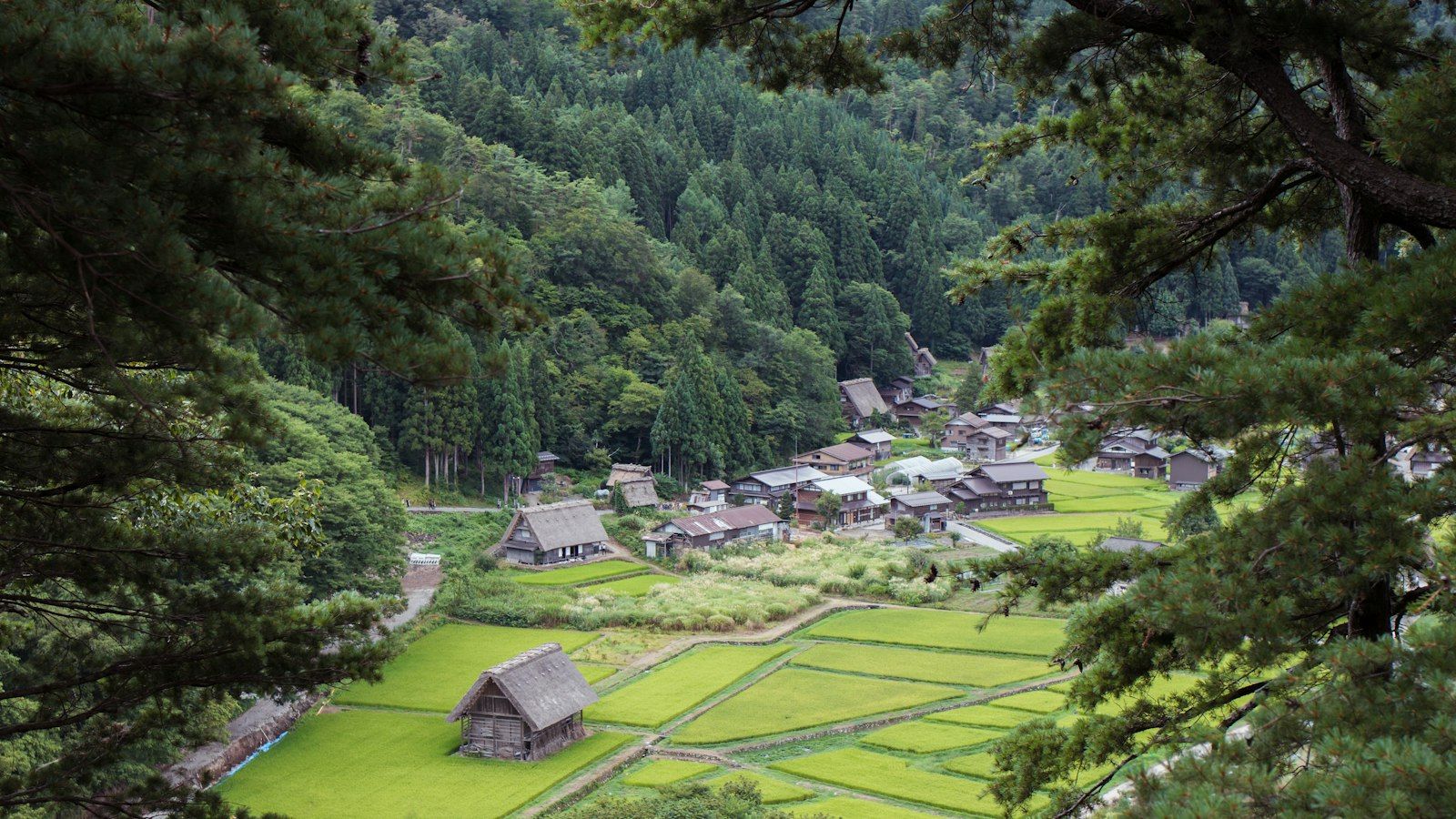
A UNESCO-listed valley of steep thatched farmhouses in the Japanese Alps. Sleep under a 200-year-old roof, eat hoba miso by the hearth, then take the bus on to Takayama, Gokayama and Kanazawa. Best time to visit: Late April to May and mid-October to early November, plus January to February for deep snow. Daily budget (budget traveller): $60 to $200 USD.
Arrive in Takayama, wander Sanmachi Suji
Morning: Take the JR Hida limited express from Nagoya (about 2.5 hours) and drop your bags at a hostel near Takayama Station. Book your Shirakawa-go bus seat for day 3 on Japan Bus Online if the service you want is marked R.
Afternoon: Walk the old merchant streets of Sanmachi Suji. Look for sake breweries with a cedar ball over the door and try a small tasting cup. Visit Takayama Jinya, the old government house (about ¥440, check current price).
Evening: Seared Hida beef nigiri from a Sanmachi stall, then a bowl of soy-based Takayama ramen. Early night.
Morning market, Hida Folk Village and Hida Furukawa
Morning: Browse the Miyagawa morning market along the river from about 7am for pickles, miso and mitarashi dango. Take a city bus or walk 30 minutes to Hida Folk Village (about ¥700) for a first look at relocated gassho houses.
Afternoon: JR local train to Hida Furukawa (about 15 minutes). Walk the Seto River canal with its carp and white-walled storehouses, and look into the small sake breweries.
Evening: Back to Takayama. Izakaya dinner with hoba miso and local sake, and pack a small overnight bag for the farmhouse.
Bus to Shirakawa-go, Wada House and the viewpoint
Morning: Nohi Bus from Takayama to Shirakawa-go (about 50 minutes, ¥2,800 or ¥2,900 from December 2026). Leave your bag at your minshuku if it can hold it, then go to Wada House (¥400, 9:00-17:00).
Afternoon: Lunch at Irori near the bus terminal. Visit Myozenji temple and the Kanda and Nagase houses. Walk 15 to 20 minutes up to the Shiroyama viewpoint, or take the shuttle from near Wada House.
Evening: Check in by mid-afternoon, as most inns serve dinner at a set time, around 6pm. Eat by the irori, then walk the emptied lanes with a torch.
Sunrise lanes, open-air museum and an onsen
Morning: Walk the paddies and lanes at first light before breakfast. Then cross the Deai-bashi bridge to the Gassho-zukuri Minkaen (¥800; closed on Thursdays from December to March).
Afternoon: Hoba miso or gassho tofu set lunch in the village, then a bowl of zenzai at the Ochudo farmhouse café. Late-afternoon soak at Shirakawa-go no Yu (about ¥800-900, bring a towel).
Evening: Second night in a different minshuku to try another family's cooking. Watch the lights come on in the farmhouse windows.
Gokayama: Suganuma and Ainokura, on to Kanazawa
Morning: Take the Kaetsuno World Heritage Bus from the Shirakawa-go Bus Terminal to Suganuma (about 30 minutes). Walk the tiny riverside village in about an hour.
Afternoon: Next bus north to Ainokura-guchi, then walk up to Ainokura's terraced village. Continue on the same line to Shin-Takaoka, and take the Hokuriku Shinkansen to Kanazawa (about 15 minutes). Check every bus time the night before, as buses are hours apart.
Evening: Check in near Kanazawa Station. Kanazawa oden or a casual izakaya in Katamachi.
Heading home: Keep a spare day before an international flight in winter, in case snow delays your trains.
What to eat in Shirakawa-go
- Hoba miso: sweet local miso, spring onion and mushrooms, often with Hida beef or pork, grilled on a dried magnolia leaf over a small burner at your table
- Gassho tofu: Shirakawa-go's famously firm tofu, served grilled on an iron plate, as yudofu or as dengaku with miso glaze
- Suttate: a creamy soup of stone-ground soybeans in a miso or soy broth, hard to find outside this valley
- Hida beef: Gifu's marbled wagyu, eaten as seared nigiri on Takayama's Sanmachi Suji, in croquettes, on skewers or grilled with hoba miso
- Soba with mountain vegetables: buckwheat noodles served hot or cold with foraged sansai such as bracken and butterbur shoots
- Gohei mochi: flattened rice cakes on a stick, brushed with sweet walnut miso and grilled, the classic snack for walking around
- Kaisendon at Omicho Market: a rice bowl piled with Sea of Japan seafood such as sweet shrimp and crab, for your Kanazawa leg
Hidden gems
- A dawn walk through Ogimachi's rice paddies before 8am, when the only sounds are the irrigation channels and the minshuku kitchens starting breakfast
- The free Ogimachi Castle ruins lookout just below the main Shiroyama deck, which gives a similar view with fewer elbows
- Deai-bashi bridge at dusk, when the river mist rises and the day crowds have gone
- Suganuma in Gokayama, a tiny riverside cluster of thatched houses where you can walk the whole village in under an hour
- Hida Furukawa, 15 minutes by train from Takayama, with white-walled storehouses and carp in the Seto River canal
Getting around
There is no train to Shirakawa-go. Highway buses run from Takayama, Kanazawa, Toyama and Takaoka to the Shirakawa-go Bus Terminal at the edge of Ogimachi. Takayama and Shirakawa-go are linked by hourly buses, and the one-way trip takes 50 minutes and costs 2,800 yen (2,900 yen from December 2026). Some but not all buses require seat reservations. From Kanazawa Station the bus takes about 75 minutes, costs ¥2,800 one way, and needs a seat reservation. Book through Japan Bus Online or the Nohi Bus site. Once you are in the village, you walk everywhere. The core is about 1.5km end to end, and the only transport is the small paid shuttle up to the Shiroyama viewpoint. For Gokayama, take the Kaetsuno World Heritage Bus, which runs a handful of times a day, and plan each leg around the timetable. Takayama and Kanazawa are both walkable, with JR trains and city buses to fill gaps. Driving is possible, but parking in the village is paid and winter roads need snow tyres.
Safety
Shirakawa-go and the wider Hida and Hokuriku region are very safe for solo travellers, and violent crime against visitors is rare. The real hazards are seasonal. From December to March the village can be under a metre or more of snow, lanes and steps turn icy, and the path up to the viewpoint is sometimes closed. Wear boots with grip and allow extra time for delayed buses. Asian black bears live in the surrounding forests, and sightings have risen across Japan in recent years, so stick to village lanes and marked paths, carry a bell on forest walks and follow any posted warnings. These are working homes in a village built of wood and straw. Smoking is restricted to designated spots because of fire risk, and you must not walk into private gardens or fields. Earthquakes can happen anywhere in Japan, so note your inn's evacuation route. Japan's emergency numbers are 110 for police and 119 for fire and ambulance.
Frequently asked questions
What does this 5-day Shirakawa-go itinerary cover?
Day 1: Arrive in Takayama, wander Sanmachi Suji. Day 2: Morning market, Hida Folk Village and Hida Furukawa. Day 3: Bus to Shirakawa-go, Wada House and the viewpoint. Day 4: Sunrise lanes, open-air museum and an onsen. Day 5: Gokayama: Suganuma and Ainokura, on to Kanazawa.
Is 5 days enough for Shirakawa-go?
Our recommended trip length for Shirakawa-go is 5 to 7 days (with Takayama, Gokayama and Kanazawa). This 5-day plan focuses on the highlights and groups sights by area so you spend less time travelling between them.
How much does 5 days in Shirakawa-go cost?
A budget traveller spends about $60 to $200 USD a day in Shirakawa-go, so roughly $300 to $1,000 USD for 5 days, not counting flights.
Where should I stay for 5 days in Shirakawa-go?
Ogimachi village core (Shirakawa-go): The heart of the World Heritage village, with Wada House, Myozenji temple, Kanda and Nagase houses, the lunch spots and most of the gassho minshuku. West bank of the Sho River (Shirakawa-go): Across the Deai-bashi suspension bridge from the village, home to the Gassho-zukuri Minkaen open-air museum and the Shirakawa-go no Yu hot spring.
When is the best time to visit Shirakawa-go?
The best time to visit Shirakawa-go is Late April to May and mid-October to early November, plus January to February for deep snow.
How do I get around Shirakawa-go?
There is no train to Shirakawa-go. Highway buses run from Takayama, Kanazawa, Toyama and Takaoka to the Shirakawa-go Bus Terminal at the edge of Ogimachi.
Is Shirakawa-go safe for solo travellers?
Shirakawa-go and the wider Hida and Hokuriku region are very safe for solo travellers, and violent crime against visitors is rare. The real hazards are seasonal.
Read more about Shirakawa-go
- Tokyo for First-Time Visitors: 5-Day Guide With Hidden Gems
- Japanese Culture and Etiquette: A Situation-by-Situation Guide
- Cultural Etiquette in Japan: Quick Do's and Don'ts for First-Timers
More 5-day guides
- Miyajima in 5 days
- Beppu in 5 days
- Ishigaki in 5 days
- Naoshima in 5 days
- Yakushima in 5 days
- Tokyo in 5 days
- Kyoto in 5 days
- Osaka in 5 days
Shirakawa-go in 2 days | Shirakawa-go in 3 days | Shirakawa-go in 4 days | Shirakawa-go in 7 days | Full Shirakawa-go guide
Joy Plus home | Destinations | Itineraries | Activities | Flights | Budget planner | Calendar | Map | Blog | Lifetime access