Yakushima in 4 days
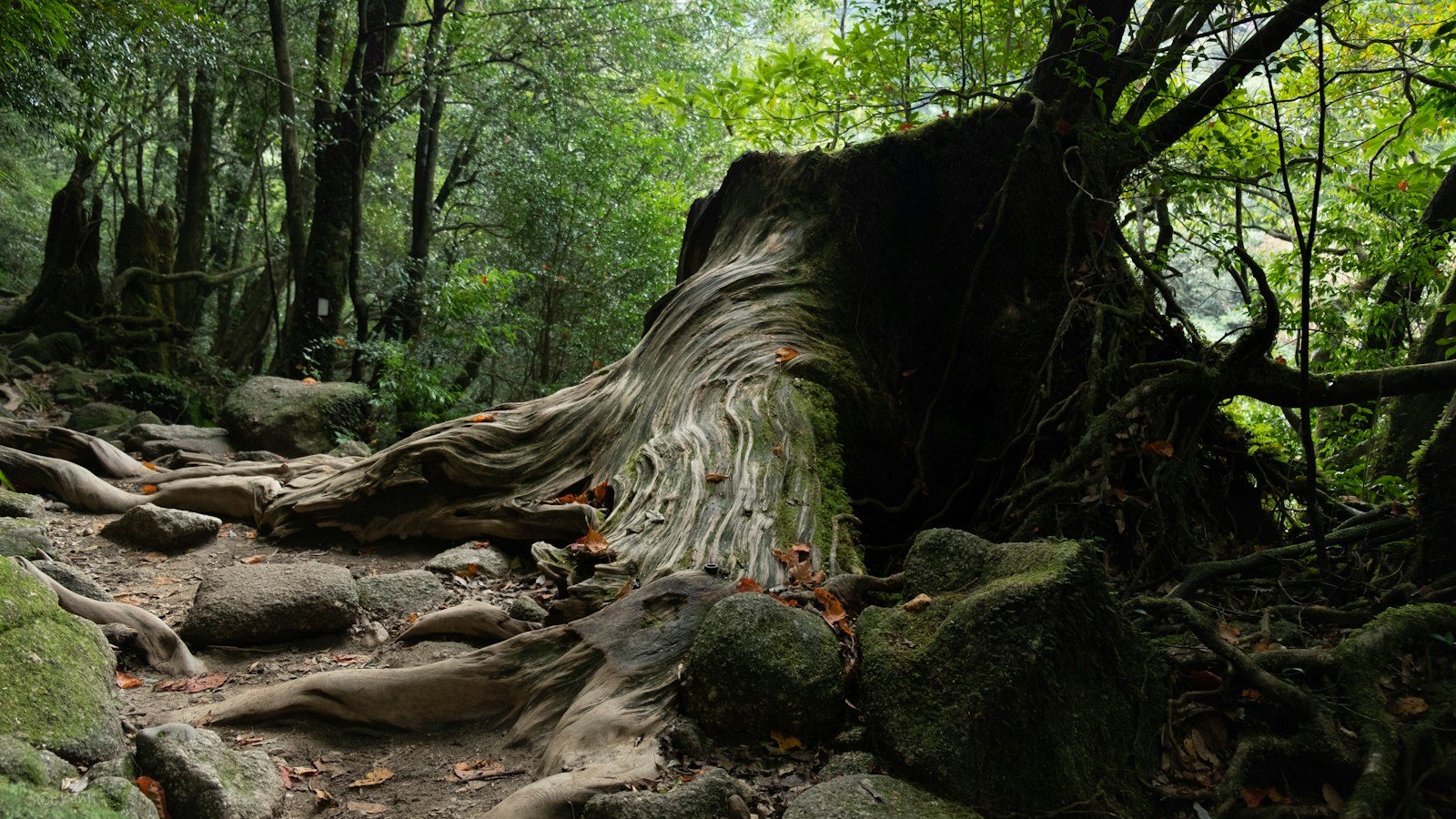
A round, mountainous island off the southern tip of Kyushu, covered in moss forest and some of the oldest cedars on Earth. You hike to trees that may be thousands of years old, soak in seaside hot springs at low tide and eat flying fish while the rain comes and goes. Best time to visit: March to May and October to November. Daily budget (budget traveller): $70 to $250 USD.
Arrive in Miyanoura
Morning: Take a morning jetfoil from Kagoshima (about two to three hours). Leave your bag at your guesthouse and buy a Yakushima Kotsu bus pass at the port.
Afternoon: Rent rain gear or boots in Miyanoura if you need them, stock up at the supermarket and walk along the Miyanoura River.
Evening: Fried flying fish and a glass of Mitake shochu at Shiosai, then an early night.
Shiratani Unsuikyo moss forest
Morning: Catch an early bus up to Shiratani Unsuikyo (about 35 minutes). Pay the ¥800 forest fee and walk up through the moss forest.
Afternoon: Continue to Taiko-iwa rock for the view if the weather holds, then walk down and take the bus back to Miyanoura.
Evening: Move to Anbo by bus and order a hiking bento from your guesthouse for the next day.
Jomon Sugi
Morning: Wake at about 4am and catch the early Arakawa shuttle from the Yakusugi Museum (¥2,000 return plus ¥1,000, cash). Follow the railway track, then climb past Wilson's Stump.
Afternoon: Reach Jomon Sugi around midday, eat your bento and head back down. Keep an eye on the time for the last shuttle.
Evening: Soak your legs at an onsen and eat a big dinner in Anbo.
South coast and seaside onsen
Morning: Take a slow morning, then catch the bus south to Senpiro-no-taki and see Toroki-no-taki falling into the sea.
Afternoon: Continue to Onoaida and Hirauchi. Time your visit to Hirauchi Kaichu Onsen for low tide.
Evening: Dinner at your minshuku or a simple meal in Onoaida, then bus back to Anbo.
Heading home: For the airport or station, see Getting there in the full Yakushima guide.
What to eat in Yakushima
- Flying fish (tobiuo): deep-fried whole until you can eat the fins, or as sashimi. Shiosai in Miyanoura is a good place to try it
- Kubiore saba: mackerel bled at sea by breaking the neck, served as glossy sashimi in season. It is a Yakushima speciality
- A hiking bento: rice balls and side dishes made by your guesthouse or a local shop, ordered the night before for an early start
- Tankan and ponkan: sweet local citrus, at their best from late winter, sold at roadside stalls and farm shops
- Mitake shochu: the island's own sweet potato spirit, drunk with hot water or on the rocks. It is hard to find off the island
- Supermarket sushi, fried chicken and fruit from the A-Coop in Miyanoura or Anbo for cheap dinners when restaurants close early
Hidden gems
- Senpiro-no-taki, a waterfall spilling over a huge smooth slab of granite in the southeast, with a viewpoint just a short walk from the car park
- Toroki-no-taki, one of the few waterfalls in Japan that drops straight into the sea, best seen from the coastal road bridge near Hara, on the south-east coast, about 20 minutes' drive south of Anbo
- The Nakama Gajumaru, a huge banyan tree near Kurio whose roots cover the ground like a cave
- Onoaida Onsen, a simple old village bathhouse where you pay a few hundred yen and soak with the locals
- The Miyanoura River mouth at dusk, when the mountains turn pink behind the town and most visitors have gone back to their rooms
Getting around
Yakushima is about 130km round, and most people stay in Miyanoura or Anbo. Yakushima Kotsu and Matsubanda run local buses, about once an hour around the coast. Buses do not cover the west coast between Nagata and Ohko-no-taki. You take a numbered ticket when you get on and pay the driver in cash when you get off. IC cards do not work. Yakushima Kotsu sells unlimited passes for ¥2,000 for one day, ¥3,000 for three days and ¥4,000 for four days, but they do not cover Matsubanda buses or the Arakawa shuttle. Up in the mountains, a few buses a day climb to Shiratani Unsuikyo from Miyanoura and to Yakusugi Land from Anbo. From 1 March to 30 November, private cars are banned from the Jomon Sugi trailhead, and you take the Arakawa shuttle from the Yakusugi Museum (¥2,000 return, cash). Renting a small car gives you far more freedom, and you will need an international driving permit. Taxis exist but are expensive over long distances, so book ahead for early starts.
Safety
Crime is very rare on Yakushima, and the real risks come from the mountains and the weather. Rivers can rise in minutes after heavy rain, and trails close when streams become impassable. Never try to cross a flooded stream, and turn back if the water is rising. Fill in a hiking plan (tozan todoke) at the trailhead box or online. Carry a headlamp, rain gear and more water and food than you expect to need. From December to March the high peaks get snow and ice, and people die from hypothermia. Typhoons can hit from August to October and stop ferries and flights for days. Phone signal fades fast in the mountains. Do not feed or approach the monkeys and deer. At Hirauchi, watch the tide and the waves. Tap water is safe. In Japan, dial 110 for the police and 119 for an ambulance or fire. Get travel insurance that covers hiking and mountain rescue.
Frequently asked questions
What does this 4-day Yakushima itinerary cover?
Day 1: Arrive in Miyanoura. Day 2: Shiratani Unsuikyo moss forest. Day 3: Jomon Sugi. Day 4: South coast and seaside onsen.
Is 4 days enough for Yakushima?
Our recommended trip length for Yakushima is 3 to 5 days. This 4-day plan focuses on the highlights and groups sights by area so you spend less time travelling between them.
How much does 4 days in Yakushima cost?
A budget traveller spends about $70 to $250 USD a day in Yakushima, so roughly $280 to $1,000 USD for 4 days, not counting flights.
Where should I stay for 4 days in Yakushima?
Miyanoura: The main port on the north coast and the island's biggest settlement. Anbo: A smaller town on the east coast, beside the Anbo River.
When is the best time to visit Yakushima?
The best time to visit Yakushima is March to May and October to November.
How do I get around Yakushima?
Yakushima is about 130km round, and most people stay in Miyanoura or Anbo. Yakushima Kotsu and Matsubanda run local buses, about once an hour around the coast.
Is Yakushima safe for solo travellers?
Crime is very rare on Yakushima, and the real risks come from the mountains and the weather. Rivers can rise in minutes after heavy rain, and trails close when streams become impassable.
Read more about Yakushima
- Tokyo for First-Time Visitors: 5-Day Guide With Hidden Gems
- Japanese Culture and Etiquette: A Situation-by-Situation Guide
- Cultural Etiquette in Japan: Quick Do's and Don'ts for First-Timers
More 4-day guides
- Tokyo in 4 days
- Kyoto in 4 days
- Osaka in 4 days
- Sapporo in 4 days
- Hiroshima in 4 days
- Nara in 4 days
- Kanazawa in 4 days
- Fukuoka in 4 days
Yakushima in 2 days | Yakushima in 3 days | Yakushima in 5 days | Yakushima in 7 days | Full Yakushima guide
Joy Plus home | Destinations | Itineraries | Activities | Flights | Budget planner | Calendar | Map | Blog | Lifetime access